Blog Details

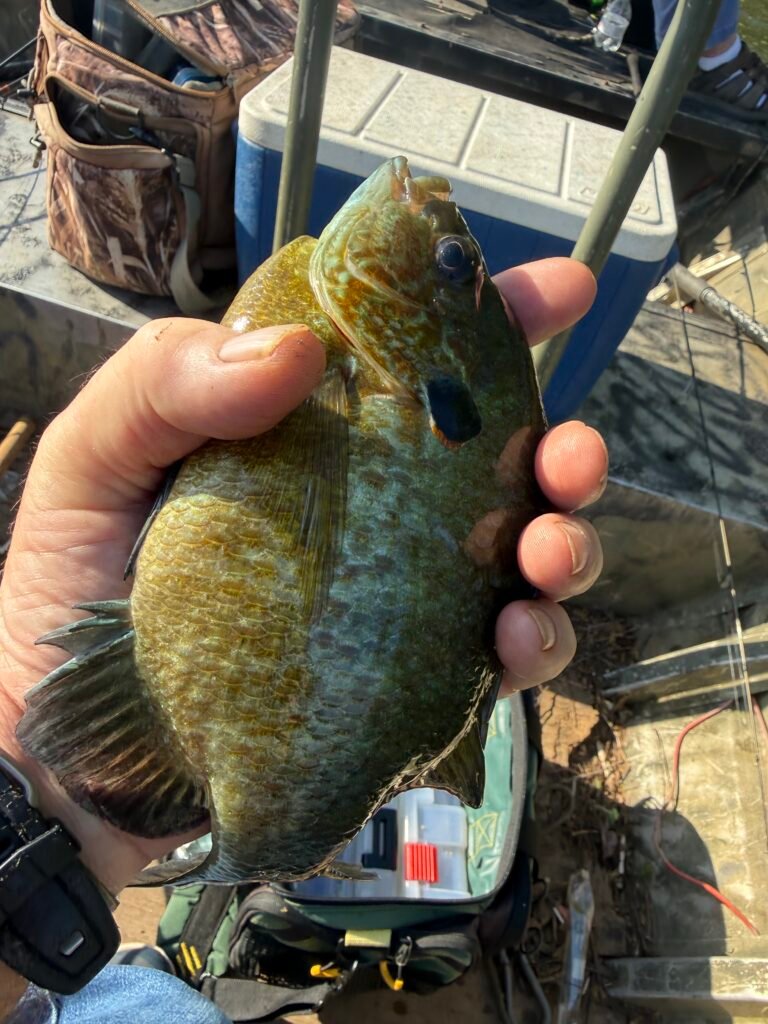
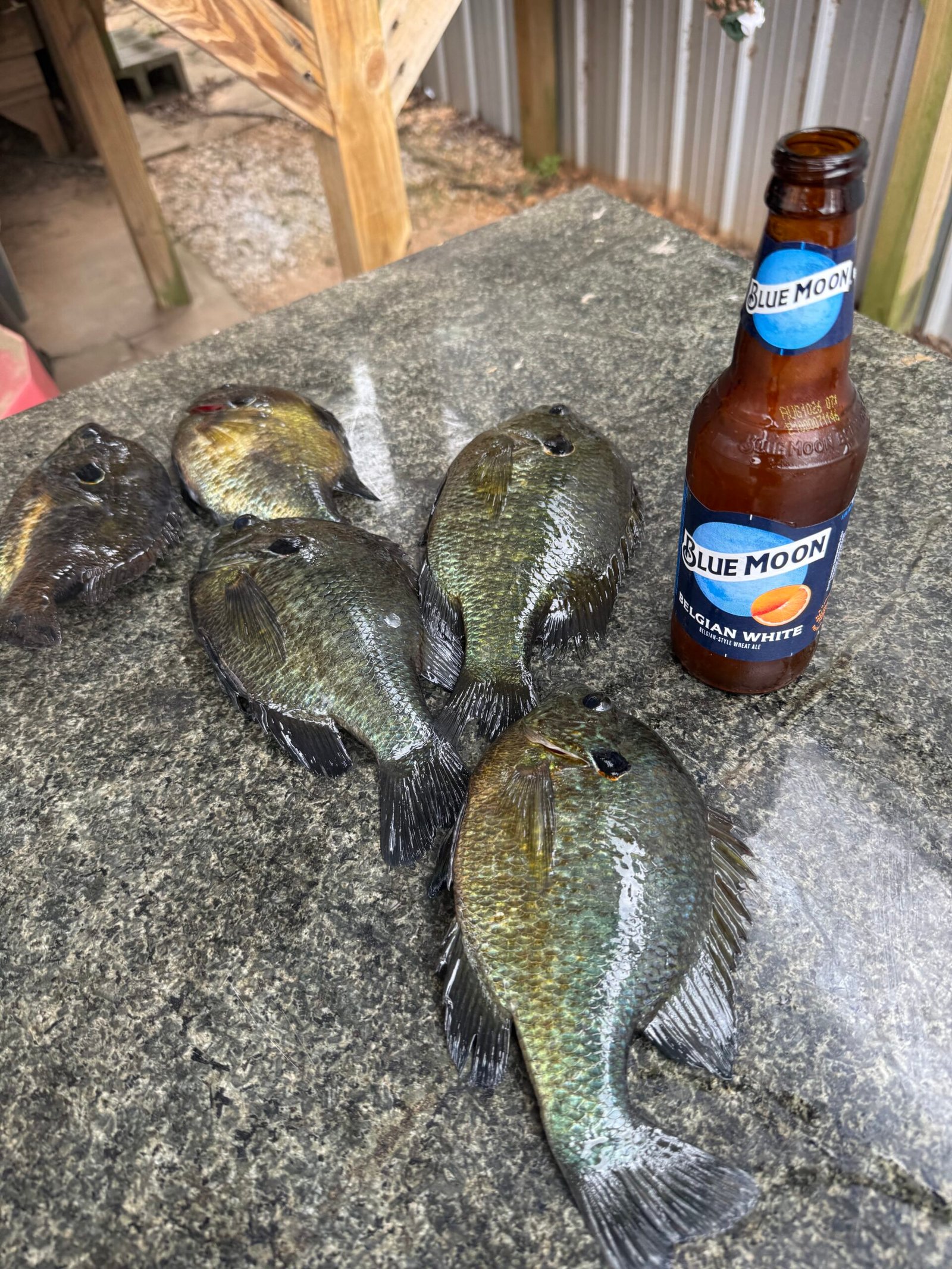
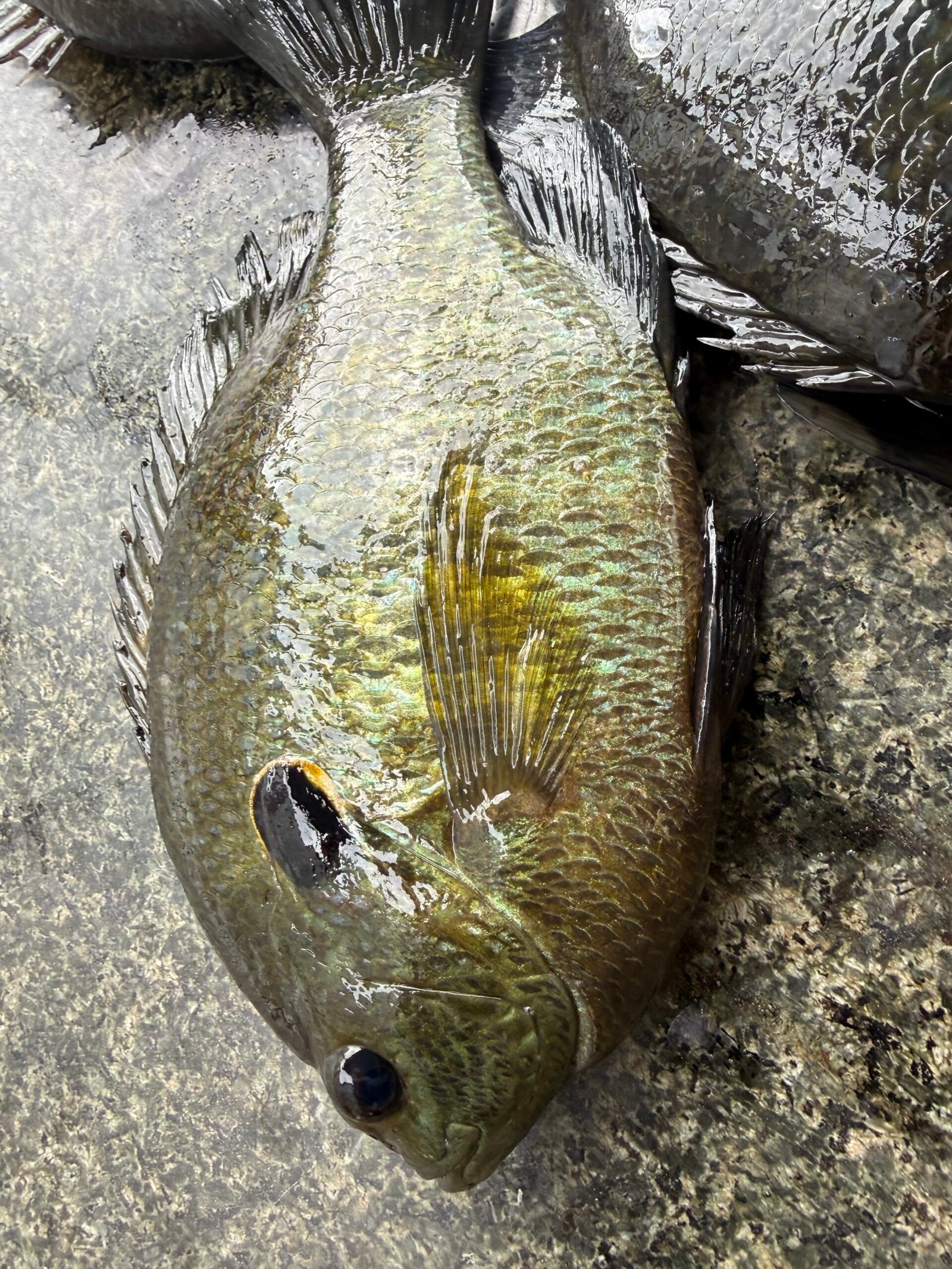
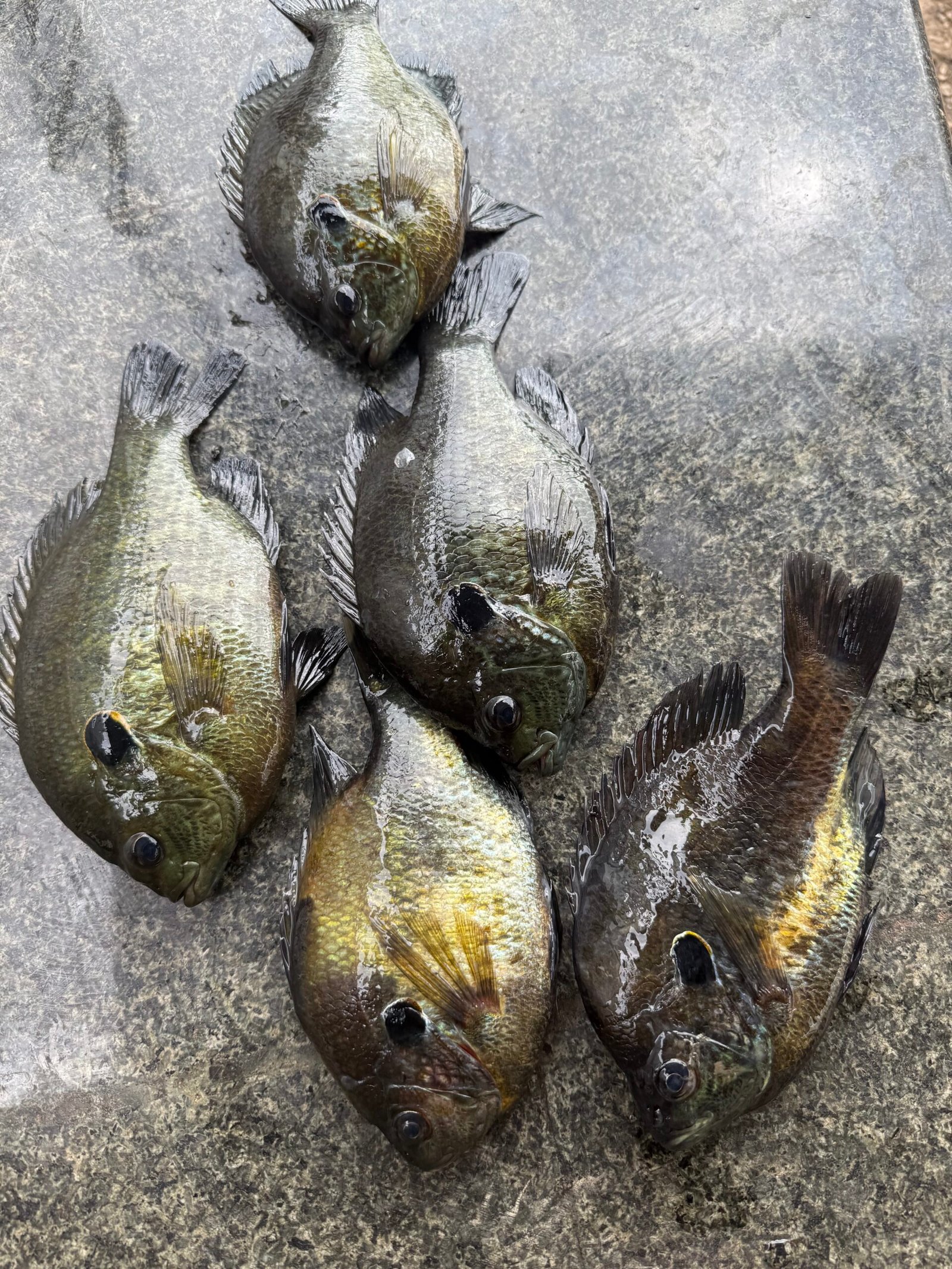
The Pan Fish Most People Miss Red Eared Sunfish AKA Shellcrackers or Chinquapins

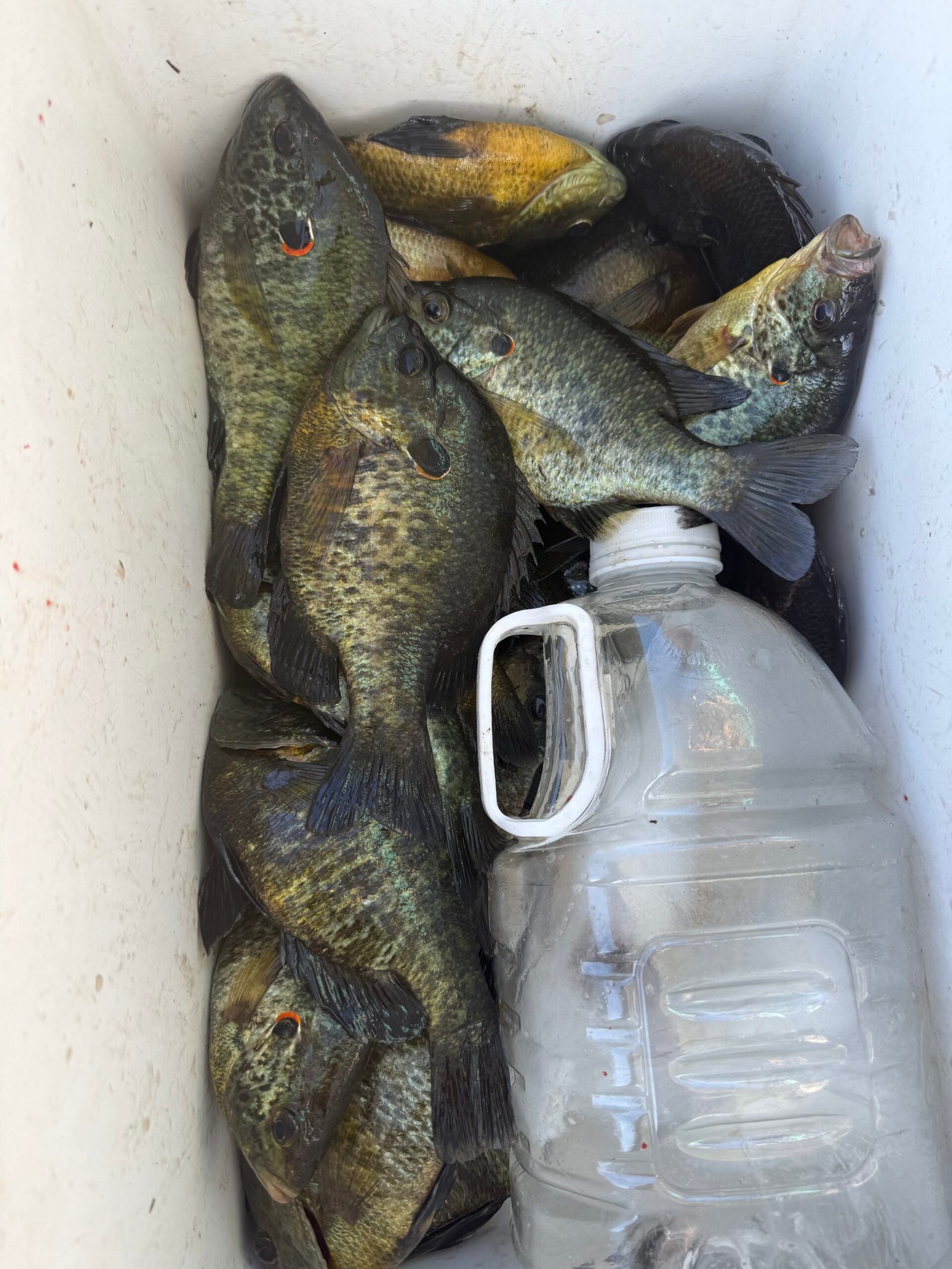
When I say that most people miss it, it is not because they are gone. Quite the contrary it is because most people miss the spawn and may not understand their feeding habits. But once you do, you can fill a cooler with these tasty, hard-fighting fish.


Redears typically spawn here in North Louisiana when the water temperature is between 68 and 75 degrees. Most importantly, peak activity is centered around the first full moon in April. It is this full moon that many people miss. As a rule of thumb: the full moon in March coincides with crappie spawning (57–64 degrees), the full moon in April with redear spawning (68–75 degrees), and the full moon in May with bluegill spawning (70–80 degrees).


While redears and bluegills are often caught together, the early full moon in April can lead to concentrated catches of big redears. How big? Well, the Lake Havasu record is slightly over six pounds. The Louisiana state record is 2.87 pounds, caught at Caney Creek Lake, where, notably, 8 of the top 10 largest specimens have come from. If you can imagine catching a 2-plus-pound bream that fights pound for pound as hard as any freshwater fish if not harder then redears are worth your time to search for.


Targeting redears can be a bit different from targeting bluegills, as they have an affinity for small mollusks, hence the name “shellcrackers.” They often feed near the bottom, looking down, and keeping a bait close to the bottom can yield significantly larger catches. Bluegills, on the other hand, often feed while looking up.


Top baits for redears include many of the same baits used for bluegills: nightcrawlers, red worms, Catalpa worms, and more. One exception is baby crawfish, which redears feed heavily on and rarely turn down. An hour or so spent with a fine-mesh net in roadside ditches, dipping them up, is time well spent if you’re targeting these great game fish.


Another proven, time-tested method is to move steadily down a bank and around cypress groves using an ultralight spinning rod tipped with a small Beetle Spin or a curly-tail grub. My favorite is a 1/16- or 1/32-ounce black hair jig with a black curly-tail grub. Once you find them, expect vicious, hard strikes that will make an old fat man giggle like a girl.


On a recent trip this past April, every fish caught over two days had small crawfish in its stomach, if that tells you anything about their preferred bait. Redears have another quirk you can watch for: when they take a bait, they often just turn the cork on its side, leading you to believe that small fish are playing with it, only for you to set the hook and find a 16-ounce or larger redear on the end of the line.


Top spots in North Louisiana to catch redears include Black Bayou at Hosston, one of my personal favorites; Caney Lake, where 8 of the 10 largest fish have come from; Lake Bistineau, which is also known for producing large fish; Caddo Lake; and Toledo Bend, particularly Teneha Creek. In South Louisiana, large catches come from False River and Old River. I’m sure there are more you just have to look for them in April.


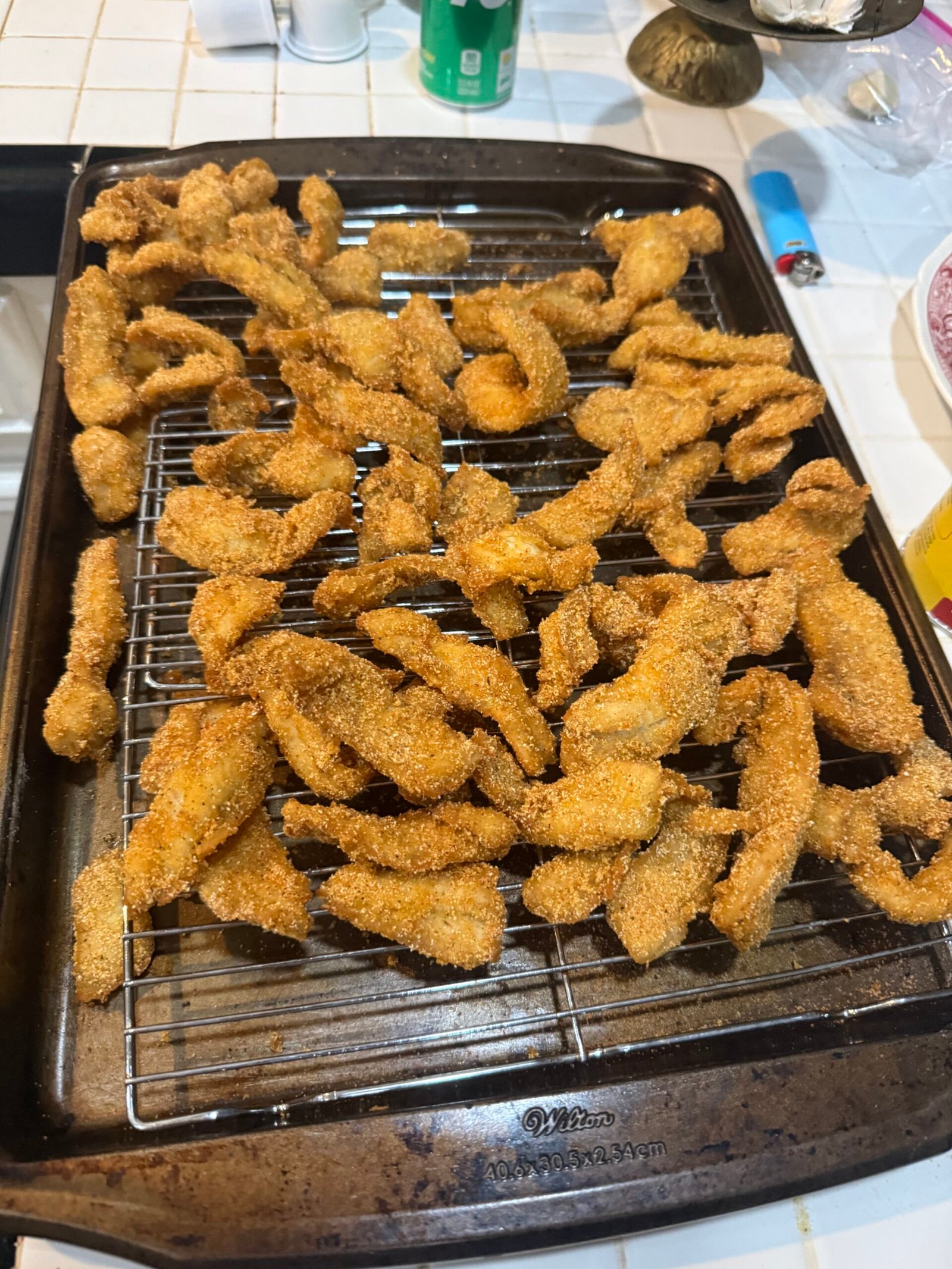
And, oh, on the table, whether fried whole or filleted as depicted below, there is nothing better!

HI, I’m JOHN HARDY

Hi, I’m John Hardy, a lifelong outdoorsman, fisherman, hunter, and cook. This site shares my extensive experience in the field, on the water, and in the kitchen, along with insights from our expert Pro Staff. Explore our proven tips and tools for outdoor adventures and culinary success.

Blog Details

Tools of the trade

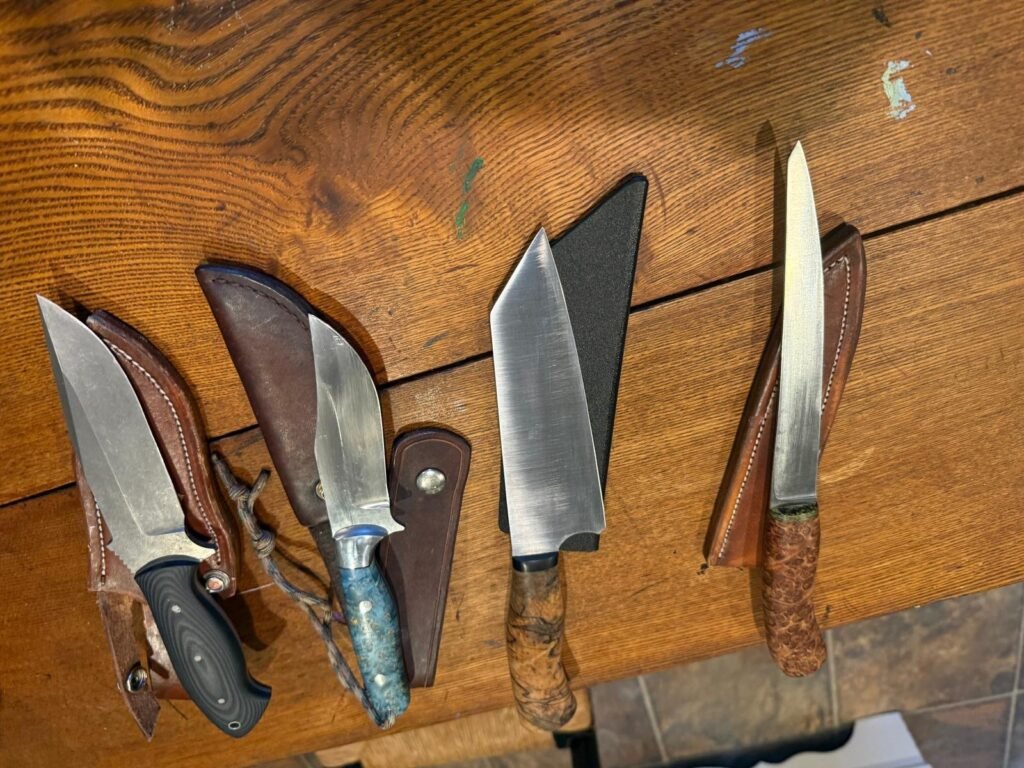
Of the many tools that are a necessary part of the life that we lead as outdoorsmen and fishermen, none is more essential than Knives. And like fishing rods, firearms, boats, and clothes, each has its own application, from the skinning rack to the kitchen. Good knives that stay sharp and last a lifetime are, to me, essential items. You can get away with cheaper knives, but you will eventually have to replace them if you use them frequently. While I am not a knife snob, I do know the difference between finely crafted steel and cheaply made junk. About 8 years ago, I received a skinning knife made by world-renowned Bladesmith Tony Baker, a Member of the Knife makers Guild, as payment for some consulting work. It immediately became my go-to knife at the skinning rack. Made from powdered steel with a beautiful aqua green resin-impregnated handle, the more I used it, the more I recognized the incredible craftsmanship that went into it. He originally built a small handful for himself and his family to use while skinning elk. He said that other knives would just not stay sharp enough to get through skinning and breaking down larger animals. After a couple of years of skinning multiple deer and Hogs without needing to resharpen, I understood the value. When it was time to be resharpened, I called him and asked if I could send it to him. He said, “Certainly,” and as we continued to talk, I knew I wanted to bring his knives to my readers. The knives listed below are one-of-a-kind, handmade in his Oklahoma shop. The Huntfishdine walking-around knife was a Joint effort between Tony and me to suit my purpose: general camp use, bushcraft, scouting, or just enjoying a walk in the woods. It is what I carry. We are now proudly offering his knives for sale.

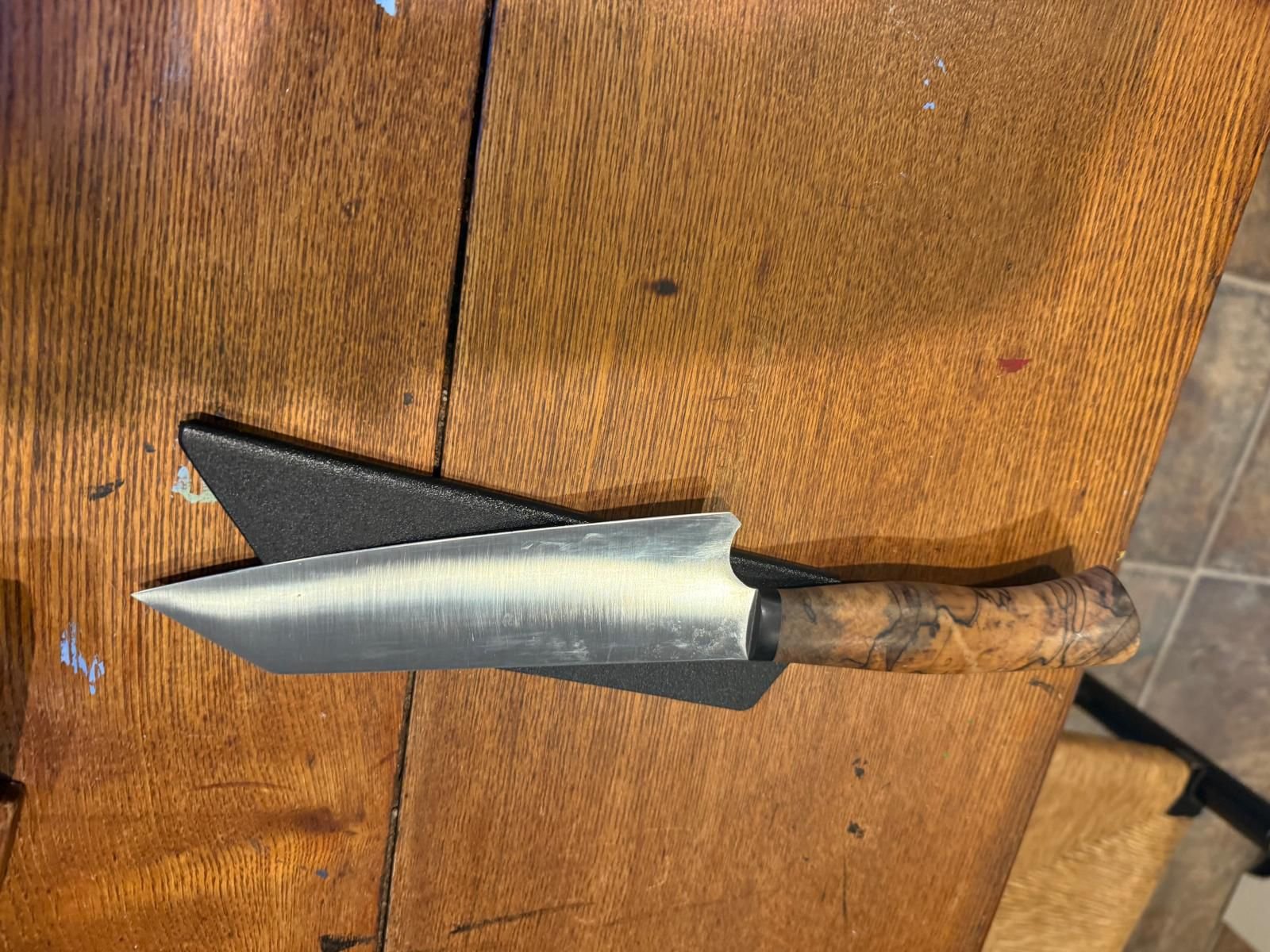
1. Tony Baker Knots of Nature Chef’s Knife: This knife was a collaboration between Tony and his wife, Amber, a master Craftswoman in her own right, with input from 2 award-winning Chefs. It is my go-to knife for kitchen work. Made from Swedish Sandvik 14C28N: Blade Length overall: 7” Cutting surface: 6” 1/2”: Tanto style tip. Handle Material is a beautiful, stabilized spalted Maple with a very comfortable, slight palm swell, and comes with a lined nylon drawer sheath. Price $400.00 each.

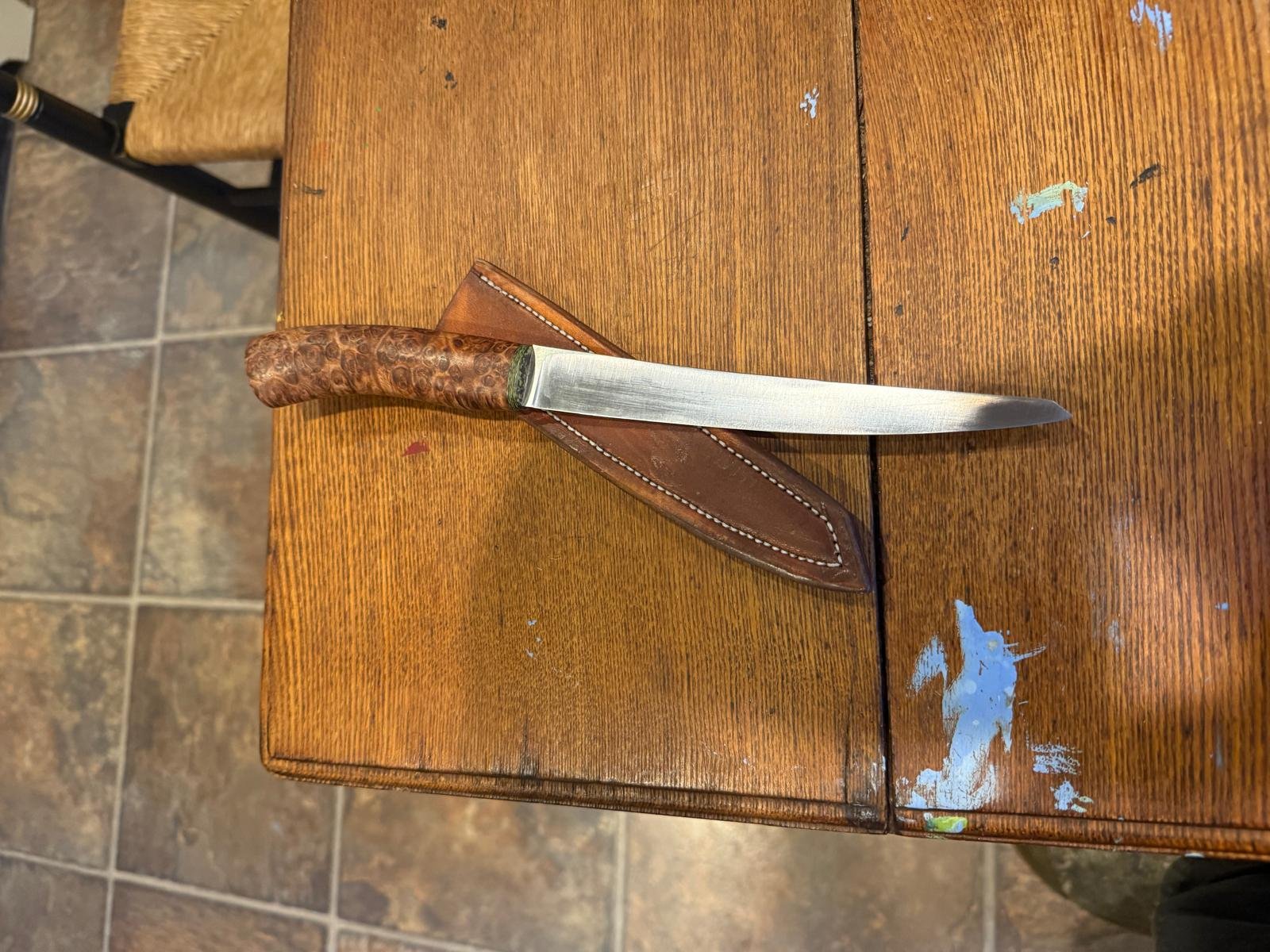
2. Tony Baker Filet Knife: Though I have had many through the years, this has been far and away my favorite. Very light in the hand, I keep it in the kitchen when I have only a few fish to clean and don’t want to break out the electric knife. Also great for slicing fruit, tomatoes, etc. Made from Swedish Sandvik 14C28N Steel. Overall Blade length is 7”: Cutting surface 6 1/2”: Tanto style point. Handle Material is stabilized resin-impregnated Spalted Maple. Comes with a heavy leather drawer sheath. Price $375.00 each.

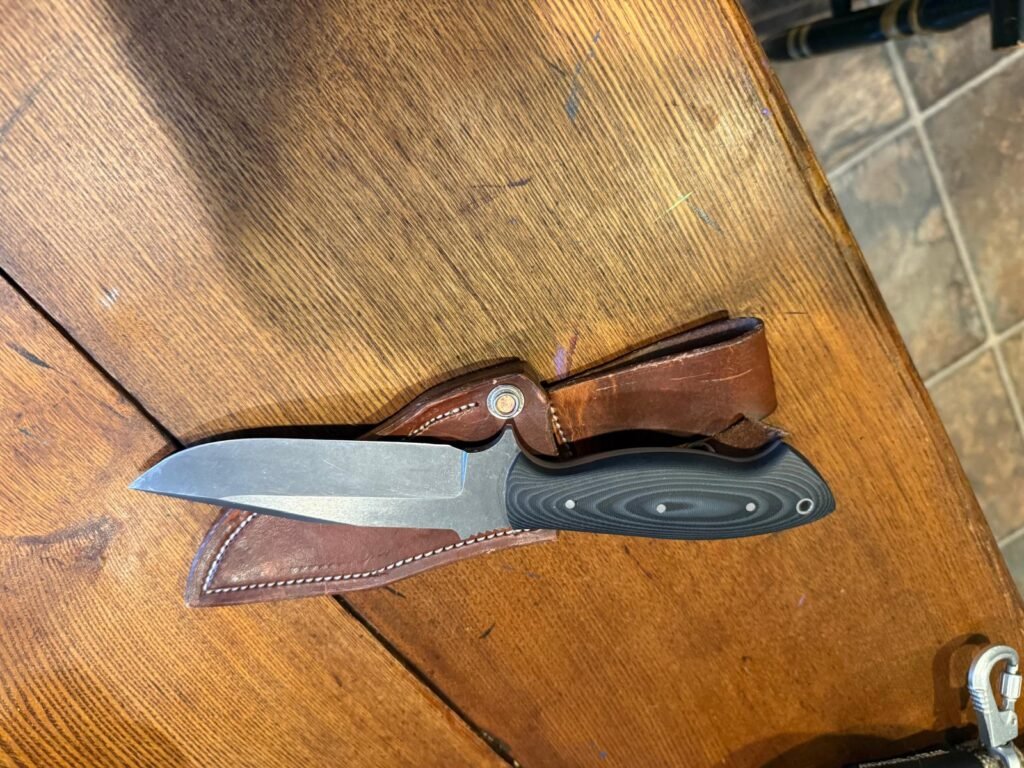
3. The Huntfishdine Tony Baker Walking around knife is made from acid-washed 3/16 SV90 blade stock, which holds an edge extremely well. Handle material is Black and Grey Micarta. Overall Blade length is 5 9/16” : Cutting surface is 4 5/8” Clip Point. Finger choil and jimped thumb ramp. Comes with a heavy-duty handmade sheath. This is a limited-edition run in SV90 steel; only 12 will be made. I have the 1st, so Thirteen in Total. These are once-in-a-lifetime knives, and you will not be disappointed. Priced at $700.00 each.

To order, send Cashier’s or personal check to Attn: Huntfishanddine 370 Carrollton Avenue Shreveport, Louisiana 71105. We will send an order confirmation once your check clears. We will send an approximate delivery date. Remember, these are one-of-a-kind custom handmade products. Typical time to ship is 8 weeks. If inventory is available, we ship within 5 business days.

HI, I’m JOHN HARDY

Hi, I’m John Hardy, a lifelong outdoorsman, fisherman, hunter, and cook. This site shares my extensive experience in the field, on the water, and in the kitchen, along with insights from our expert Pro Staff. Explore our proven tips and tools for outdoor adventures and culinary success.

Blog Details

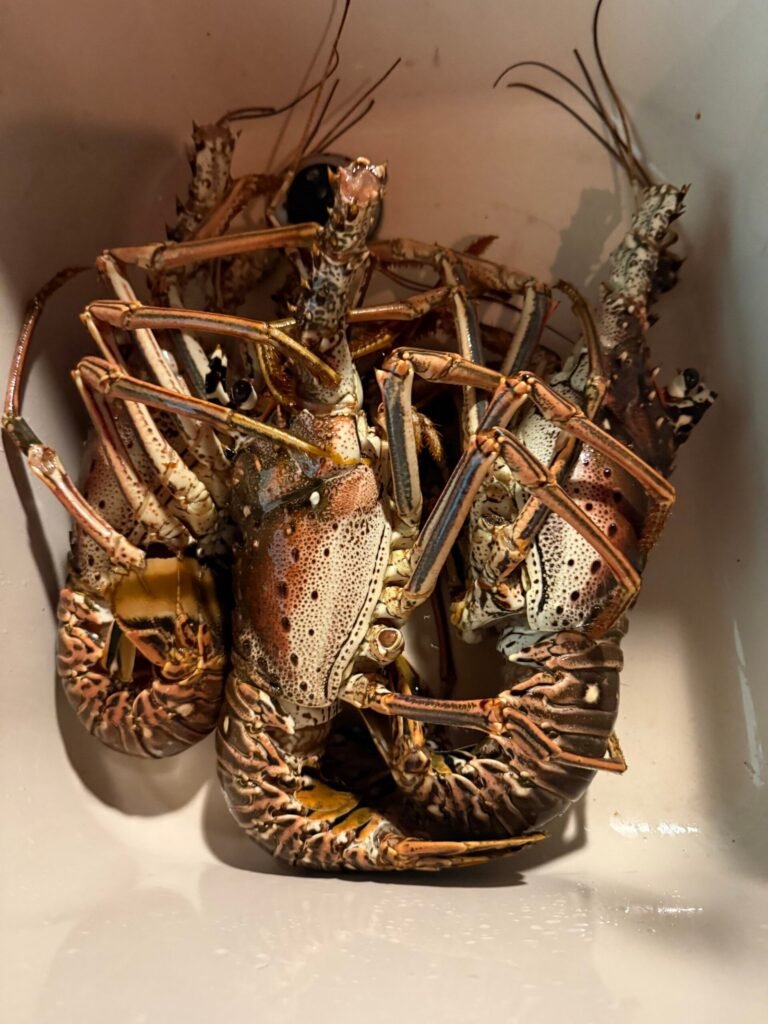
Belizean Spiny Lobster Salad

During my most recent trip to Placencia, I set out to create a memorable lobster salad inspired by local flavors and fresh
ingredients. This recipe, which became my staple for several days, is best served on Ritz crackers or locally made Coconut
bread. Pair it with an ice-cold Belikin, Belize’s national beer, or a chilled glass of Chardonnay for a perfect meal.
Ingredients

  • 3 Large fresh Spiny Lobsters Boiled in lightly salted water for about 20-25 minutes tails removed and chilled for an hour.
  • 1/3 cup Mayonnaise
  • 1/3 cup Heinz salad cream
  • 1 teaspoon Dijon mustard
  • 1 Tablespoon of Marie Sharps belize hot sauce
  • 3 tablespoons fresh-squeezed Belize Lime Juice
  • 1/2 cup finely minced Celery
  • 2 Tablespoons chopped green onions, salt, and fresh ground black pepper to taste.

Directions

Place all ingredients in a bowl and combine gently. This can be served right away, but chilling for an additional 2 hours or so will
give the ingredients time to combine.
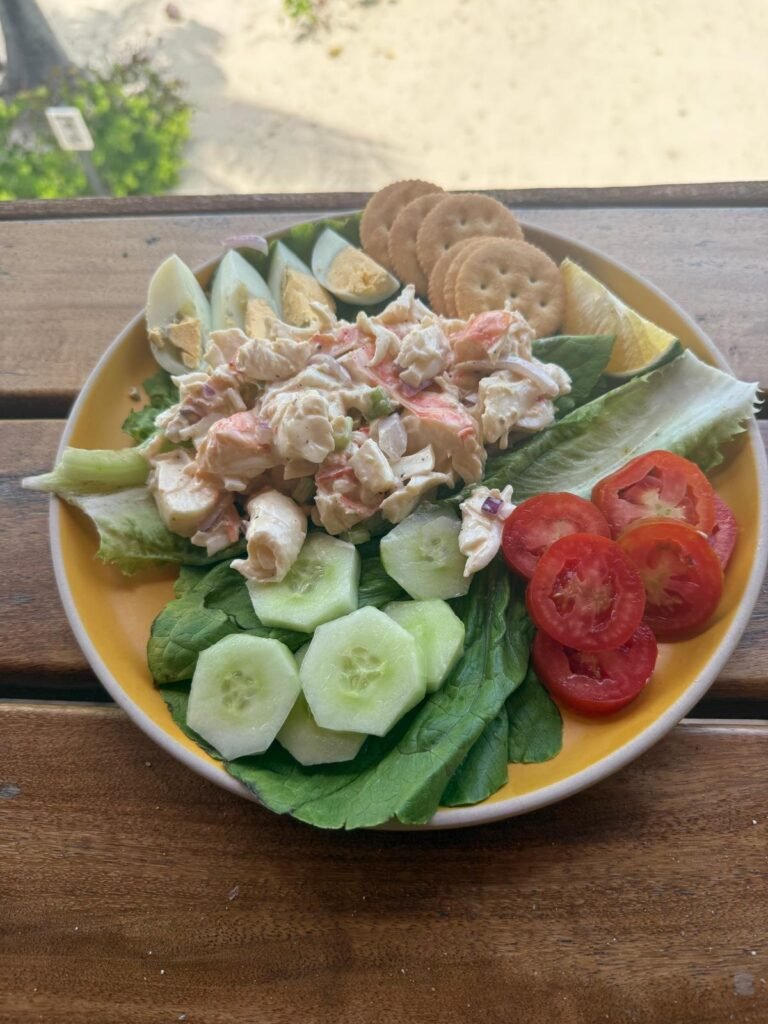
Serve on a bed of lettuce with fresh-sliced tomato, boiled sliced eggs, sliced cucumber, and a wedge of lime, with Ritz
Crackers. In the town of Placencia, some of the locals make fresh coconut bread rolls, and they make delicious lobster rolls with
this salad.

HI, I’m JOHN HARDY

Hi, I’m John Hardy, a lifelong outdoorsman, fisherman, hunter, and cook. This site shares my extensive experience in the field, on the water, and in the kitchen, along with insights from our expert Pro Staff. Explore our proven tips and tools for outdoor adventures and culinary success.

Blog Details

Placencia, Belize, A quiet Caribbean Paradise

I went to Belize to rest, be quiet, and relax, work with local seafood, and yes, to fish, and found so much more.

After caring for my aging parents for 8 1/2 months, I was exhausted and looking for a place without high-rise condos, bars, and the associated noise and nightlife —a place where I could fish, not for the freezer, as they were still full. But just for the pure pleasure of catching and releasing some of the top sportfish in the world. Permit Bonefish and Tarpon. After extensive research, I selected Placencia as my destination, a small town offering excellent accommodations, great local seafood, and some of the most knowledgeable, professional, and capable flats guides anywhere in the world. “Charles Leslie and sons.”

Getting There

Getting to Placencia is relatively straightforward, with several major airlines offering flights from Houston, Texas, to Philip S.W. Goldson International Airport in Belize City. It is then only a 25-minute flight aboard either Maya or Tropic Air to Placencia airport. These flights depart about every 30 minutes, so if you miss one, as I did, you can catch the next one. When planning, allocate at least 2 hours in Belize City to clear customs; although it’s not difficult, it does take some time. If you want to buy alcohol, do so at Belize City’s duty-free Liquor shops. They will pack it for you and load it onto your flight to Placencia. Though widely available in Placencia, it is much less expensive. Arriving in Placencia, I met Bridget Poper and her partner Steve Williams of Tropical Reef Rides, who had my Golf Cart waiting for me at the airport, along with a stocked cooler. Bridget and Steve are Transplants from New Mexico and run a top-shelf operation providing golf carts, guided trips, and restaurant recommendations, and even took us directly to where we were staying. I really couldn’t say enough about them. Not only do they have the best Carts in Placencia, but Bridget also checked on us every couple of days to ensure we were both enjoying the peninsula, as well as to keep us aware of great food and invited us to church services. It was a level of service that is hard to find anywhere. You can reach them at +505 417 6667. You will not need a car here unless you plan to spend a lot of time driving further south. It takes about 25 minutes in a golf cart to travel the full length of the village. It is also only about a 30-minute ride north to the Maya Beach Sein Bight area if you want to see it.

Things To Do

Placencia is not only a paradise for outdoor activities, but also a vibrant community with a rich cultural heritage. The town is dotted with world-class snorkeling spots, numerous shops, and beachside cafes. Coffee shops like Chill Point, which also offers a wide selection of homemade ice cream, and bakeries with some of the best orange breakfast muffins I’ve ever had, are popular hangout spots. If hiking is your thing, nature hikes into the Jaguar preserve will take you through lush jungle forests. Trips to Mayan ruins are also available, offering a glimpse into the region’s fascinating history and culture.

Accomodations

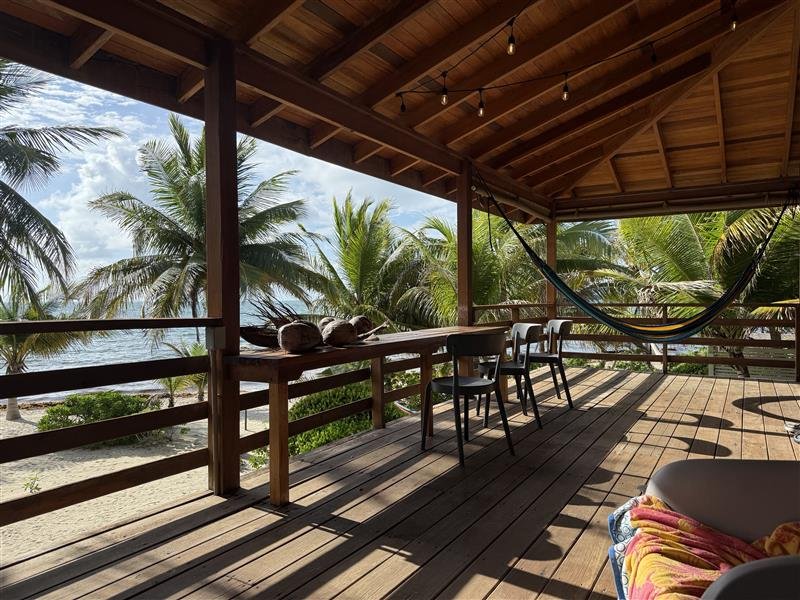
Accommodations in Placencia run the whole gamut from luxury Beachside Homes replete with a personal chef for $1000.00 a night, which, if split between several couples, is still less than many other Caribbean Destinations. To simple air-conditioned beachside Cabanas for $130.00 a night. My own choice was the Ohana Kuknat Cabin, run by Isabella Gayot, who was waiting for us to arrive and had her sons take our luggage up to our room—a kind gesture that I greatly appreciated. At about $190.00 a night, it was a bargain, a semi-private beach, a full kitchen, three coffee makers, and a sprawling porch with Hammocks at both ends. There is a high season which runs from November 20th to April 15th. The rest of the year is considered the low season, offering better prices and fewer crowds.

Dining Placencia

From Beachside Cafes, like the Tipsy Tuna and Cozy Corner, to Fine Dining at Rumfish Y Vino, Muna Rooftop restaurant, and the Galley serving a variety of Caribbean-inspired dishes. Some notable items included the Thai Lobster Tacos and Green Banana Fries, which are made fresh daily at Tipsy Tuna. The Split pea soup with crispy Pork Belly and ginger dumplings appetizer, and fried whole red snapper at Muna Rooftop Restaurant will dazzle the senses. Lobster Curry at the Galley was a signature dish and very tasty. One of the primary reasons I visited in July was to enjoy fresh and inexpensive spiny lobsters. The lobster season starts on July 1st and kicks off with the Lobster Festival. If you’d like to cook your own, that’s no problem. They can also be purchased live from several vendors, including the co-op at the end of the peninsula. Wanting to really savor them, I made a simple cold lobster salad and enjoyed it for several days with chilled vegetables and Ritz crackers. See my recipe on the recipe page. Conch is a staple in Belize, and its season runs from October 1st to June 30th of the following year. If you would like to enjoy both sweet spiny Lobsters and Conch, the seasons do overlap; plan accordingly.

Fishing in Placencia, Belize

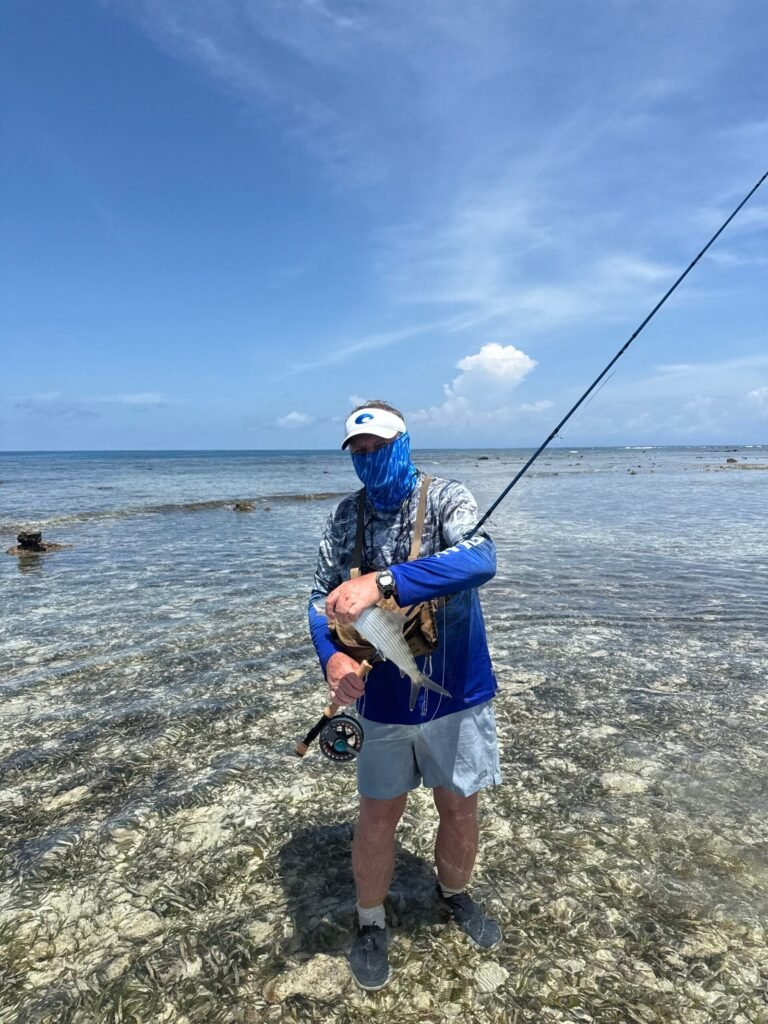
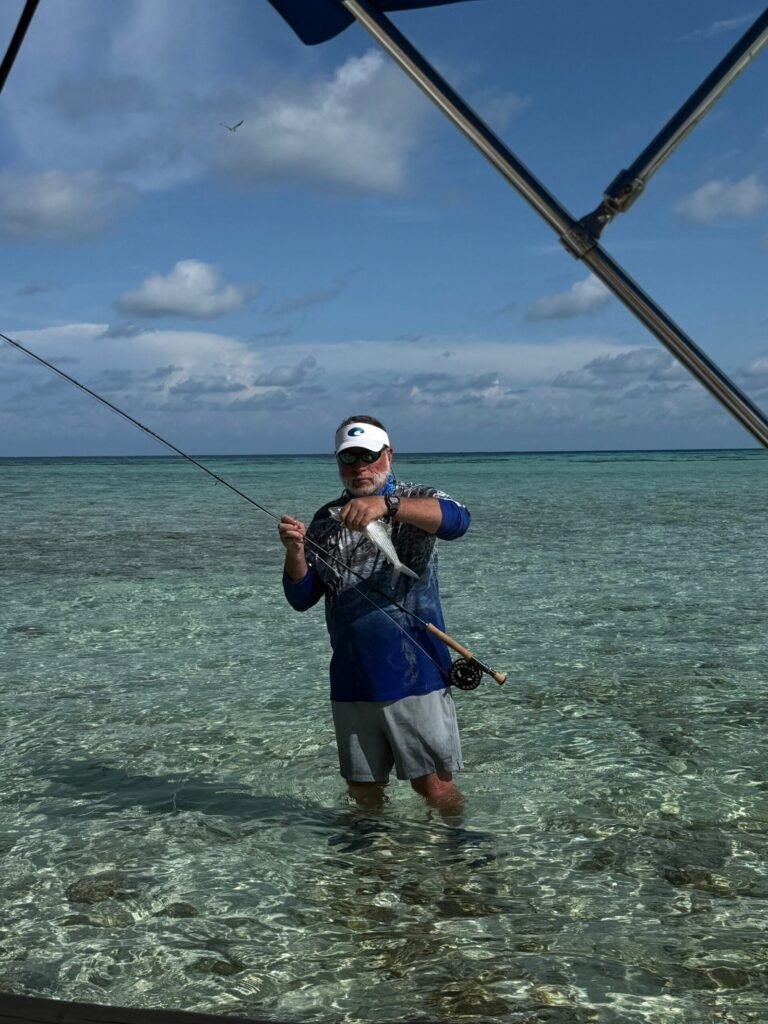
While I was there to relax as much as possible, I was there to fish the coral finger reefs bordering what is known as Permit Alley. This Place is literally a fly fisherman’s dreamland, with excellent bonefishing, Tarpon, and the Holy Grail Permit. The guides I chose were Charlie Leslie and Sons, with years of knowledge of these flats and fish passed down to his sons by Charlie Leslie senior, who, Lefty Krey himself once said, was the best Permit guide he ever fished with. Charlie Leslie Junior was my initial contact, and he helped me plan the trip based on tides and fly selection. I fished with Marlon Leslie and his son Kelvin, who will be the 3rd generation of their Legacy as some of the best flats guides anywhere in the world already having his captains license and his own boat now being outfitted, with his quiet kind manner and the knowledge of his father Marlon his uncle Charlie Jr and Charlie senior I am sure he will be another great fisherman and guide. It is their preferred method of wading for Permit that makes fishing with them both exciting and productive. When I asked Marlon Leslie why, he said, ‘If you are polling, you lose the Element of surprise.’

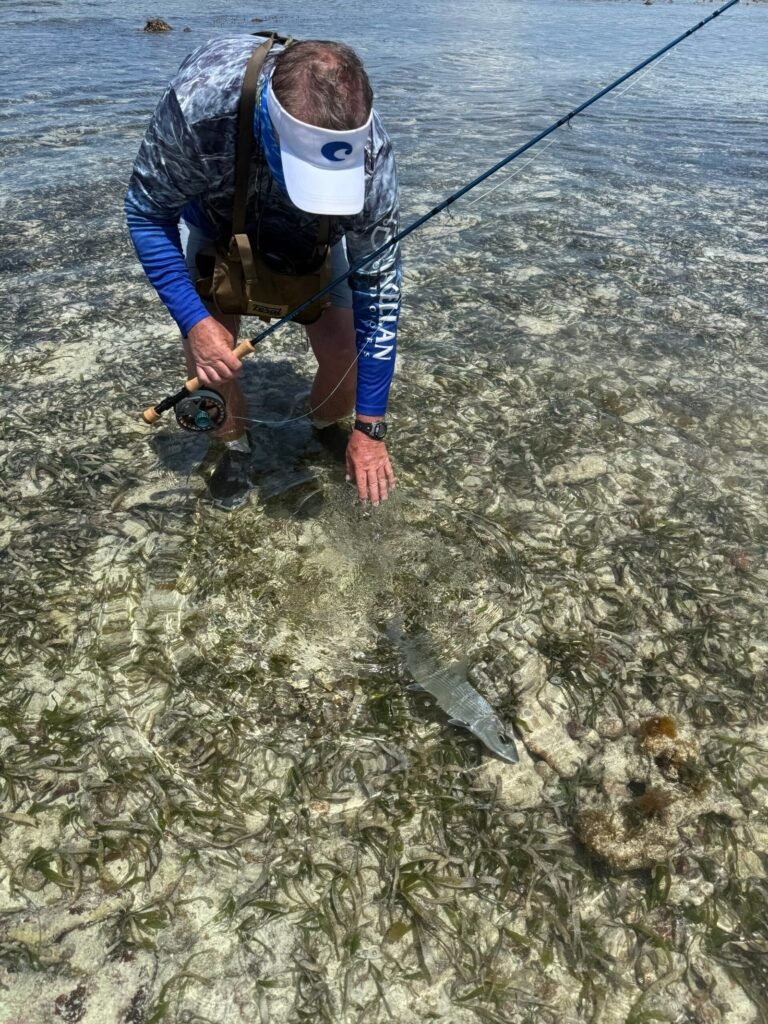
Once I slid over the edge of the boat and began to follow Marlon slowly wading through those long coral reefs, and realized that we could see the fish, then stalk them into casting range, I knew I was in my Element. Seeing those black sickle tails cruising in those shallow, gin-clear waters was one of the most beautiful sights I have ever seen. Permits can be finicky; even the most well-presented offering can be turned down, driving some men mad and leading them to pursue them for years until they catch one. It was that way for me until the last day. July is the windiest month of the year in Belize, and I had practiced casting in the wind before arriving. I can not stress enough the importance of doing so if you go. Casting at moving fish in a 15-knot or more wind requires skills like leading a bird with a gun; it just takes practice. Though I had multiple shots at Permit each day, it wasn’t until the last day that I had my chance, and a fish took my fly, a rookie mistake of raising the rod tip as opposed to strip setting the hook. I felt the fish momentarily, and then he was gone, but I will go back and with a lesson learned to strip set, not trout set. If You go the usual selection of Baur crab and  Camo Crab flys will work well and I would suggest 12lb Flouro Carbon leaders of at least 12-14 ft. For Tarpon shock leader 50-20 lb test and tarpon toads in varios colors and sizes. For Bonefish the classic Bonefish bitters in both grey and green two or three sizes along with Pink Lady’s and small shrimp imitations will all work well. Suggested line sizes 10 lb Flouro in 10-12 ft lengths. My rod choice were two 9 ft 8 weight rods one fast action The signature series Trident Atlas which was the Rod of choice most days which I also had in a 10 weight. A medium action 8 weight which was great for Bonefish and was all that was needed.

Bonefish in Belize are not known for their size, but they are numerous. Let me say this: a three to four-pound bone fish on an eight-weight rod will make your heart race and bust your knuckles if you try to hold the reel handle. They can peel more line off a reel faster than you can say Bonefish. Seeing them in schools of just a few to more than 30, in inches of water, is a sight that will make any fly fisherman smile. The skinny water flats are beautiful places, and with some of the flats situated in sight of Guatemala’s mountain ranges, this area is particularly picturesque.

Tarpon in Belize are plentiful, depending on the time of year. Both juveniles and larger fish are there. Seeing them is one thing, but catching them is another. Marlon Leslie’s remark that at times they can be fish of a thousand casts, and they were that for me, two missed strikes left me empty-handed, but seeing their Emerald green shapes cruising under our boat endelibly etched them in my mind.

I have fished in many places and can safely say that Placencia, Belize, will always be one of my favorites, and it is definitely one I will return to if you to are a fly fisherman then go and enjoy.

HI, I’m JOHN HARDY

Hi, I’m John Hardy, a lifelong outdoorsman, fisherman, hunter, and cook. This site shares my extensive experience in the field, on the water, and in the kitchen, along with insights from our expert Pro Staff. Explore our proven tips and tools for outdoor adventures and culinary success.

Blog Details

Broken Bow, Oklahoma: A Place to relax, Hunt Fish, or Dine

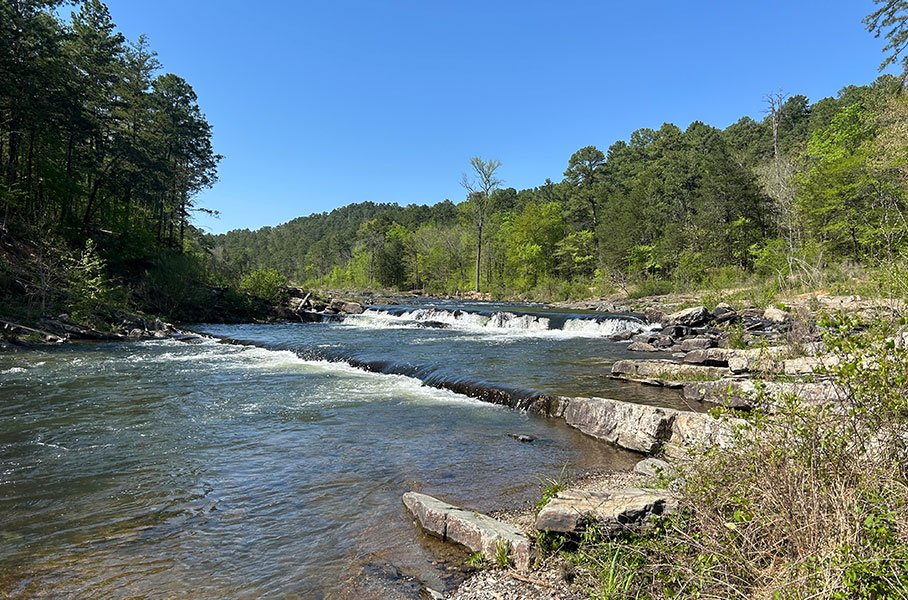
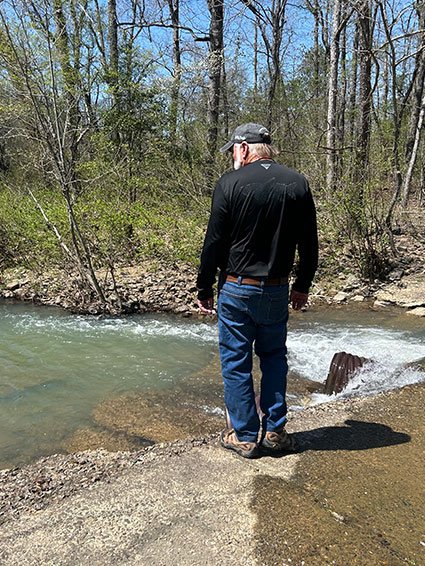
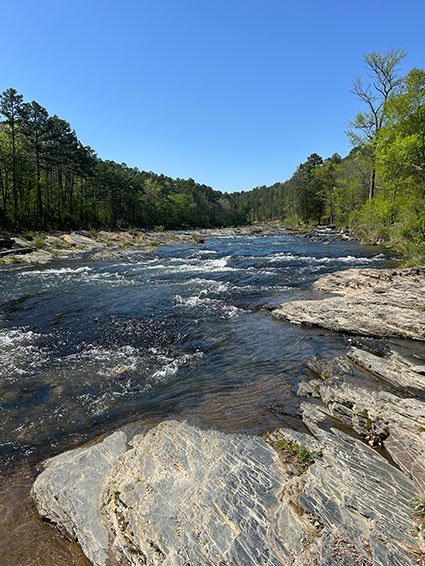
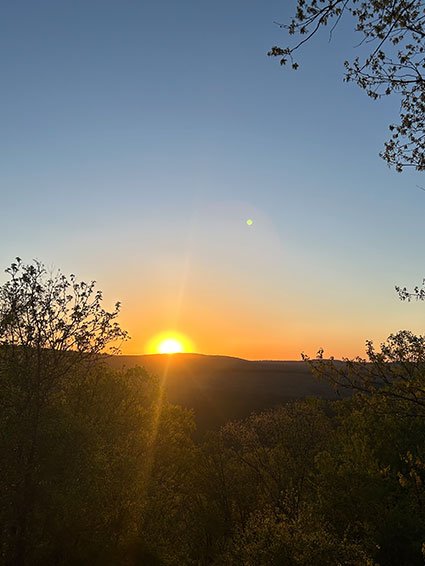
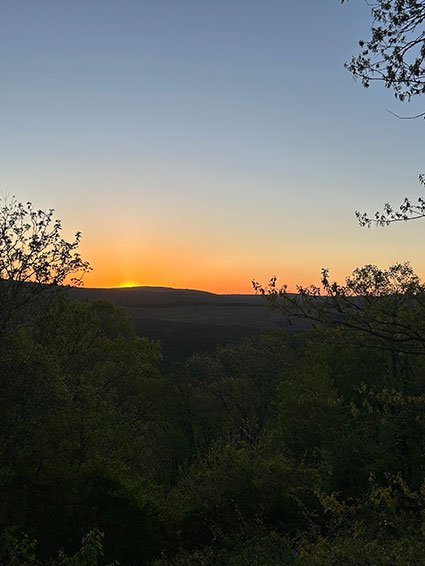
In mid-April of this year, I was looking for a place to unwind for a few days. While I had been to Broken Bow in the past, it had been 40 or so years ago. I remembered driving up the Talamena Skyline Drive and thought it would be an excellent opportunity to relax and see some different Terrain, and it was well worth the drive. Searching for a cabin rental before the Easter Holiday was tough on short notice. We thought the Holiday crowd had already rented everything until we discovered a hidden gem. Indian Lookout Mountain Cabins: There are only five cabins on the mountainside, each one with a balcony facing east, which allows for spectacular sunrises over the mountains in the morning and at that time of year moonrises in the evening. Each cabin is nicely appointed and has a hot tub, Hammock, and gas grill. The Hammock and hot tub were particularly interesting to me, and I used both daily. After a day of rest, I began to explore and found everything I could imagine for an outdoor enthusiast. If fishing is your game, you have a lot to choose from. You can find trout fishing in the lower 12-mile stretch of the Mountain Fork River and 5 miles of that in the beautiful Beavers Bend National Park. You can also find Bass, Smallmouth, and Largemouth, along with excellent Crappie fishing in Broken Bow Lake and Nearby Piney Creek Lake. The water is clear, and topwater fishing can be outstanding. Hunting, well, the cabins are across the road from the 200,000-acre Three Rivers WMA. I drove through it twice and saw both Turkeys and numerous White Tail deer.

A few Trophy-sized bucks come from this area annually. For the traveling bird hunter, while there every morning, I heard coveys of Bobwhites whistling and their covey calls every evening. The Three Rivers WMA has miles of excellent quail habitat and, while not the numbers of other famed quail destinations, very huntable populations. Spending a few days there in the late summer with a whistle and a GPS to mark coveys would be a productive plan. If small game is your target, there is also the Little River NWR, one of Oklahoma’s most extensive remaining tracts of bottomland habitat, approximately 15,000 acres. Waterfowl hunting can be good at times, and after visiting with some of the locals, the word is that while it is not a wintering area when the birds are there, there are a lot of Mallards. There is also a myriad of activities for non-hunters, from ATV rentals to golf, and the dining opportunities include world-class brick oven Pizza at Grateful Head Pizza Company to craft sandwiches at Brick and Bread, including a delicious Cuban Sandwich and micro-breweries and wineries as well. In my travels, I have not found another place with such a diverse opportunity to Hunt, Fish, Dine, or relax on the side of a mountain and be thankful to be alive.

HI, I’m JOHN HARDY

Hi, I’m John Hardy, a lifelong outdoorsman, fisherman, hunter, and cook. This site shares my extensive experience in the field, on the water, and in the kitchen, along with insights from our expert Pro Staff. Explore our proven tips and tools for outdoor adventures and culinary success.

Blog Details

Doves: Destination Texas

Texas Dove Hunting By John Hardy: A Memorable Adventure

To kick the new year off right, I needed some time away from the internet and the never-ending stream of emails. Missing the September dove hunting season of last year left me feeling as though I was missing a big part of who I am at my core. So, knowing that all of the migratory birds of the year would be collecting in deep south Texas, I set off in a search for the best of January birds.

Finding Texas Elite Outfitters

After some conversation with friends, I located Texas Elite Outfitters, run by Capt. Arnold Lacount in Mission, Texas. After a brief conversation with him, he stated, “Just get here, and I will show you some doves.”

The Hunt Begins

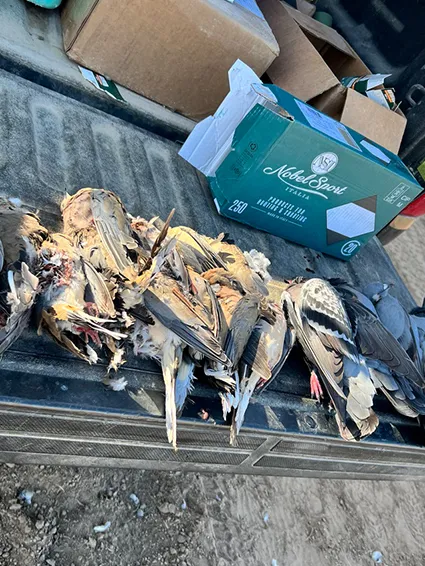
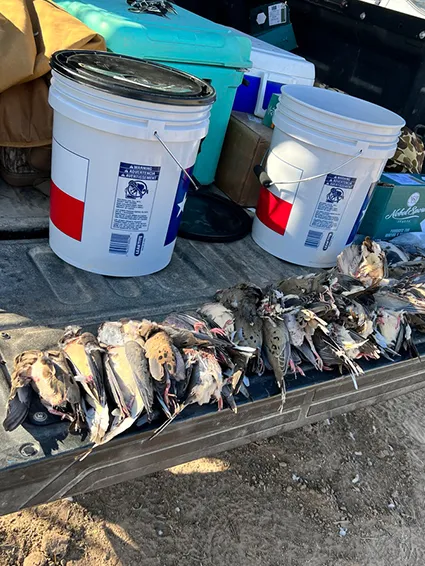
To begin our expedition of hunting in Mission Texas, we arrived the following day in the dark, meeting guide Renee Beltran, who farms the local area and plants sunflowers and sesame for birds across hundreds of acres. He pointed to several fields and said take your pick. We quickly took positions not far from the truck next to two brush lines and waited for the light. Renee had indicated that the birds would come from the south and that they did flight after flight, pouring over us for the first 30 minutes, so many that we could not load fast enough. I wish I could say that with that many birds, it would only have taken me 30 minutes to shoot a limit, but that was not the case. There was the element of the ever-present Texas wind, and the birds came three feet off the ground before instantly being on top of you. These Jan doves have been hunted, and seeing any movement would slide in the wind right or left and be gone. Ok, enough excuses. Eventually, we got it down and were limited out by 9:00.

Day 2: A Spectacle of Doves

Back at the truck, we picked all the birds and headed back to Mission to discuss the shooting, rest, and finish processing and packaging the birds. It was to be the drill for the next three days. The next morning, having watched the bird’s line of travel, we set up in a cut between two brush lines where I had watched hundreds of birds passing the previous day. I wish I had a video of that spectacle of wave after wave of mourning doves Texas streaming through that cut, eager to get to the sesame fields across from us. Even if I had had someone loading for me, I could still not have kept up with their numbers. I had to settle my nerves before the svelt tightly choked 28 gauge and 15/16 of 7 1/2’s began to stack them up, but I again figured it out and limited it in about the same time. Birds picked and processed a nap, and we hunted up some good Mexican fare. Asking my guide where somebody might find that, he suggested Marie Taquirea.

Day 3: Continuing Success

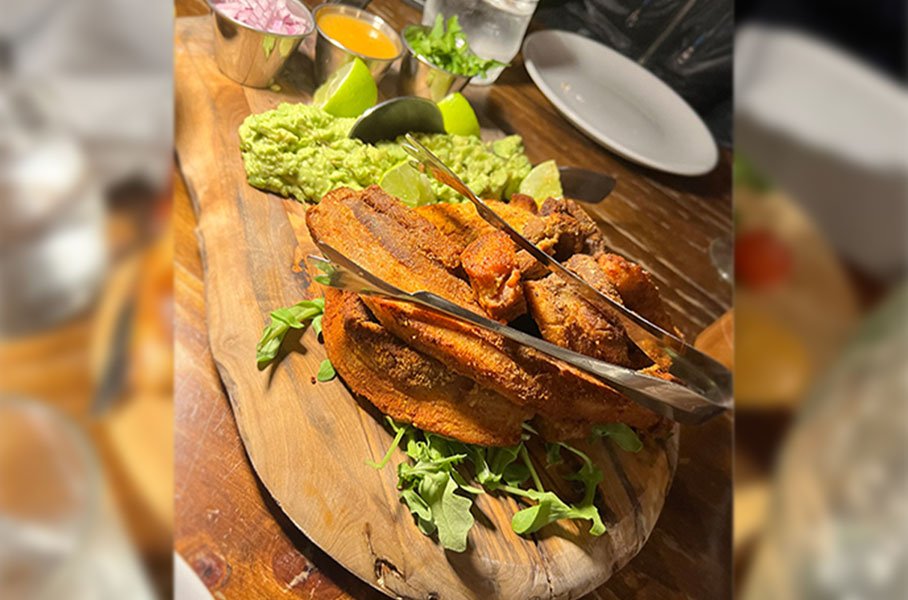
What a find! The menu is entirely Spanish, so my passable but limited Spanish came in handy. We were treated to delicious Barbacoa tacos, sweet tea chips, and homemade red and green sauce.
After a night’s rest with dove dreams patterned from the past two days, the next morning, my guide wanted to rest in the previous field. Hence, he stationed us at a small gas plant about a 1/4 of a mile from where we had been and said to be patient; the birds wouldn’t get here until about 9:30. Renee lived up to his reputation as one of the best Texas hunting guides and proved his knowledge of the birds coming to perch after feeding. They appeared in mass just when he said they would, and the shooting was again extremely good, and we limited again in short order.

Dining Discoveries

Feeling the success of the past three days and wanting a different dinner experience, I researched a restaurant called Lorettos in Mission, Texas, and made reservations. Lorettos is an upscale dining experience that anyone would enjoy. It offers excellent service, incredible appetizers, and entrees that include Salmon Wellington, which was off-the-charts good. You can find the menu online; a trip there is well worth the price.

Reflections and Recommendations

I have embarked on Texas dove hunting adventures for many years from central Texas south to Beeville and Three Rivers, and it has always been good, with Sept and October providing Excellent shooting for White Wings and Mourning doves. But this was a treat; Mission turned out to be one of the best dove hunting spots in Texas! It wasn’t hot; it wasn’t cold. It was balmy, and the doves were there in mass. The food was good, the company was good, and I’m already booked for the same period next year with a larger group. If you like to shoot, you can simply not do better than to call Texas Elite Outfitters and enjoy the professional hospitality of Arnold Lacount and Renee Beltran, who will show you some doves. If you prefer the heat of September, their hunts in planted sunflowers are outstanding, with limits of whitewings being the rule, usually in less than thirty minutes. If that’s not enough, there are rock pigeons, thousands of them, and yes, they are lovely to eat, too; in addition to bringing back the generous Texas possession limit of 45 doves per person, we got back with 20 or so Rock Pigeons to be turned into dinners for days. If you’d like to shoot with Texas Elite Outfitters, book early. They will fill up fast in September. Closing off with the last of dove hunting tips by John Hardy, Hidalgo County is one of three that have huntable numbers of Chachalacas or Mexican Tree Pheasants, a whole different shooting experience but one that can provide a unique and memorable hunt.

HI, I’m JOHN HARDY

Hi, I’m John Hardy, a lifelong outdoorsman, fisherman, hunter, and cook. This site shares my extensive experience in the field, on the water, and in the kitchen, along with insights from our expert Pro Staff. Explore our proven tips and tools for outdoor adventures and culinary success.

Blog Details

The Art of Patience: Lessons Learned from Turkey Hunting

Turkeys Or Crappie: The Ultimate Decision

I have been hunting turkeys for over 40 years, sometimes not at all, sometimes persistently, and sometimes as a professional guide in South Texas, so I am qualified to share some turkey hunting tips for beginners. I sometimes have to decide whether to fish for crappie during the springtime spawn or hunt turkeys, as both happen simultaneously. However, I decided to fish this spring and give the birds peace. But at the request of pro staffer Lee Lawson, who shot his first turkey with me 30 years ago, I found myself on my way to Sinton, Texas, to try and fill a tag.

Trip To Stinton, Texas

The weather had turned cold and wet as it often does during spring turkey hunting season every year. But with the front moving steadily east, the promise of sunshine and warm weather kept us hopeful for good gobbling weather. After arriving in Sinton, we opted for some great Mexican Food at Rancheros in Refugio, after getting guns and gear ready, we got in bed early, knowing the 4:30 alarm would be coming.

Navigating at Night and Setting Up Before Dawn

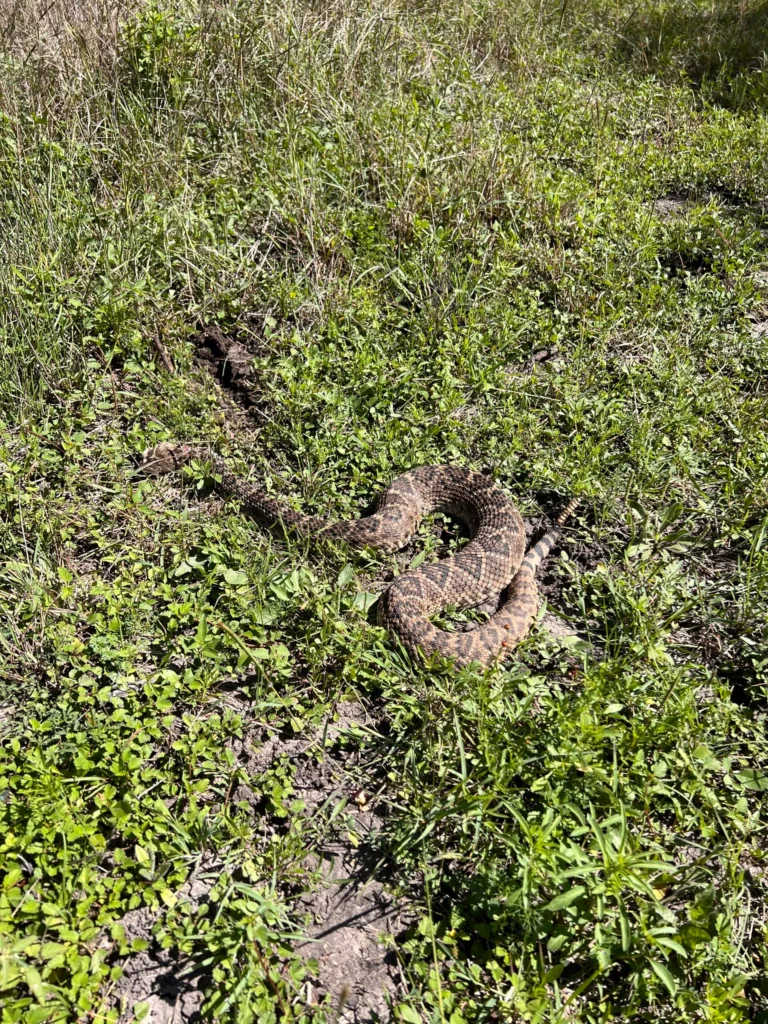
The following day was as we had anticipated: stars shining and soon to be sunny. With a known roost on the property, we decided to set up as close to it as possible, requiring us to do something I would only do with quality night vision: sneak through the Texas brush at night, think rattlesnakes, big western diamondbacks. After walking across one sendero in the moonlight far enough away from the birds that we would hopefully not be seen, Lee turned on his PVS-14 Monocular, the best gear for turkey hunting in South Texas during nighttime, and we entered the brush, picking our way slowly through the cactus and horse thorns, watching closely for snakes.

Early Encounter And Roosting Birds

We found our way to another Sendero just 100 yards from the roost. The previous week, both Lee and his daughter Emily had killed a pair of Longbeards from this exact location and had another mature gobbler on camera. and he was the target bird named Short Beard, due to beard rot, which is caused by a vitamin or melanin deficiency causing the bottom of a turkey’s beard to dry and break off. He was shown on camera daily from 8:00 to 9:00 and again later in the afternoon. The morning broke clear, and just a little before sunrise, the roost came to life with 25 or more birds talking to each other before flying down, the hen’s tree calling, Jakes chirping, and gobblers, booming a chorus that I will not forget. About fifteen minutes later, a sight that turkey hunters rarely see occurred when the roosting birds pitched in front of us, some as close as six feet. With that many Turkey eyes looking for danger, they can still pick you out no matter what you do or how well you are camouflaged. And as luck would have it, that hen at 6 feet, after peering intently at me, decided that things were just not quite right and gave the putt putt putt to the flock and walked north with the rest of the flock in tow.

Awaiting The Short Beard Gobbler

They stopped at about 70 yards, shook off the possibility of danger, and began feeding, the Jakes forming one band and hens by themselves, loosely forming their group. The Jakes began squabbling to establish a pecking order or who would be boss for a day. Three of the largest Jakes came back, and we decided not to take one and to wait for the short beard gobbler that had been showing up regularly. We waited while the flock fed north and disappeared. Eight o’clock came, and he was a no-show. We continued to wait, staying in one location, avoiding the urge to play the run-and-gun game, which, at age 67, I was grateful for, not that I couldn’t, just not my preference.

Sudden Appearance And Final Shot

Ten o’clock came, and having sat in a turkey chair and gone through a whole bunch of blogs on preparing wild turkey recipes for five hours, I was getting a little sore in all the wrong places. Deciding to give it another little while, we waited, and eleven o’clock came, at which point we began to discuss plans for the afternoon hunt. After deciding to hunt the same place, we cut some more brush for the blind, gathered our gear and started walking back to get the ATV. I had gone only fifty yards when I heard a gobble from the direction the birds had gone and turned around to see Lee motioning for me to come back, so after a short dash, I crawled back in the blind and my chair and got as comfortable as I could when the bird sounded off again he was closer. When Lee called again, he immediately answered, so we just stopped calling, knowing that he knew exactly where the call came from.
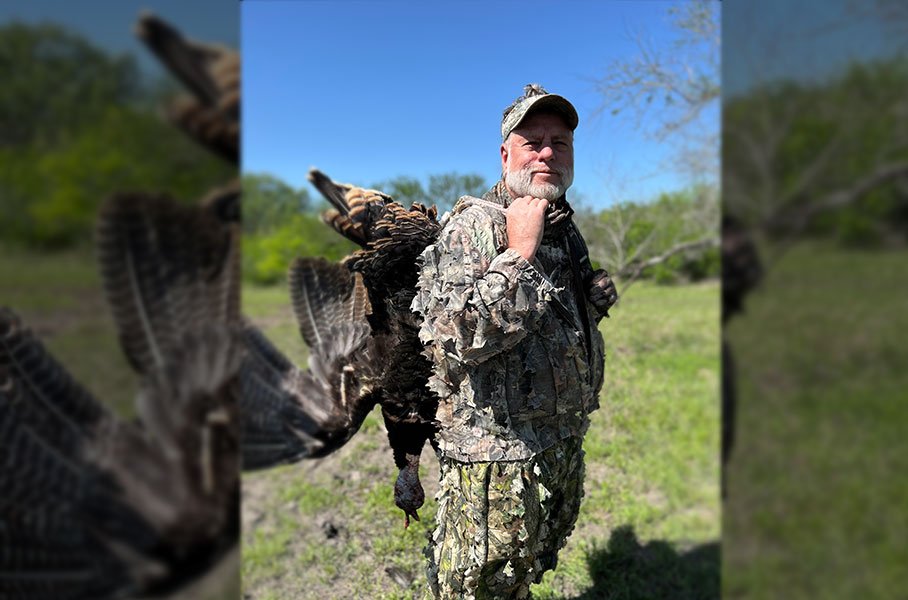
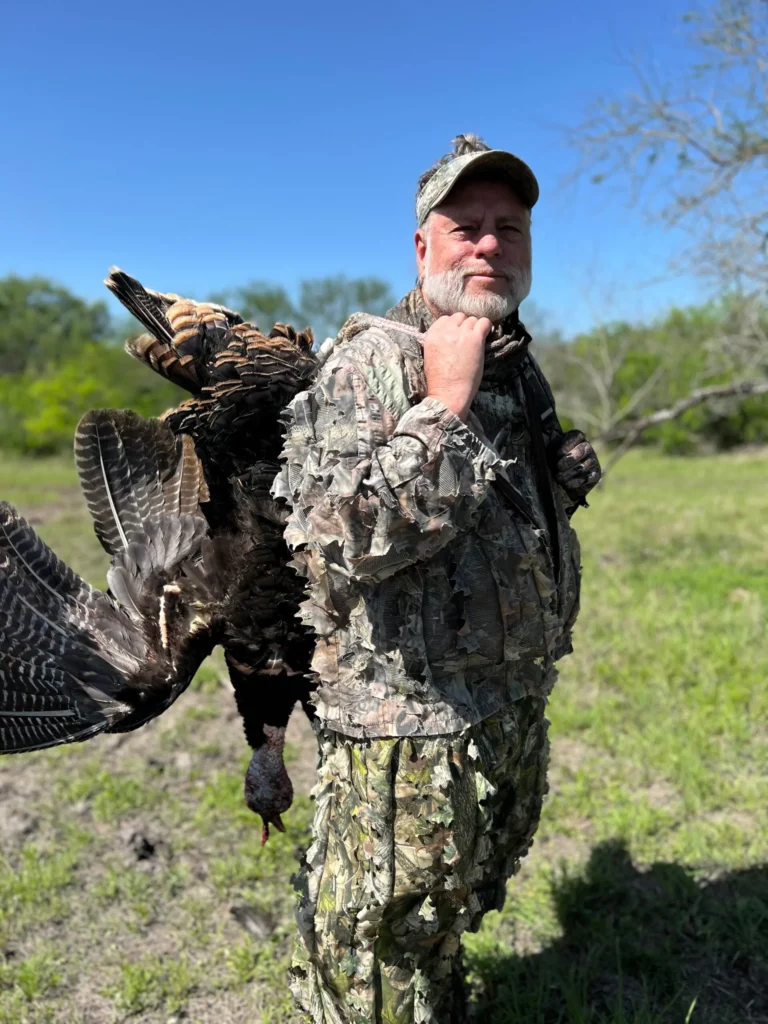
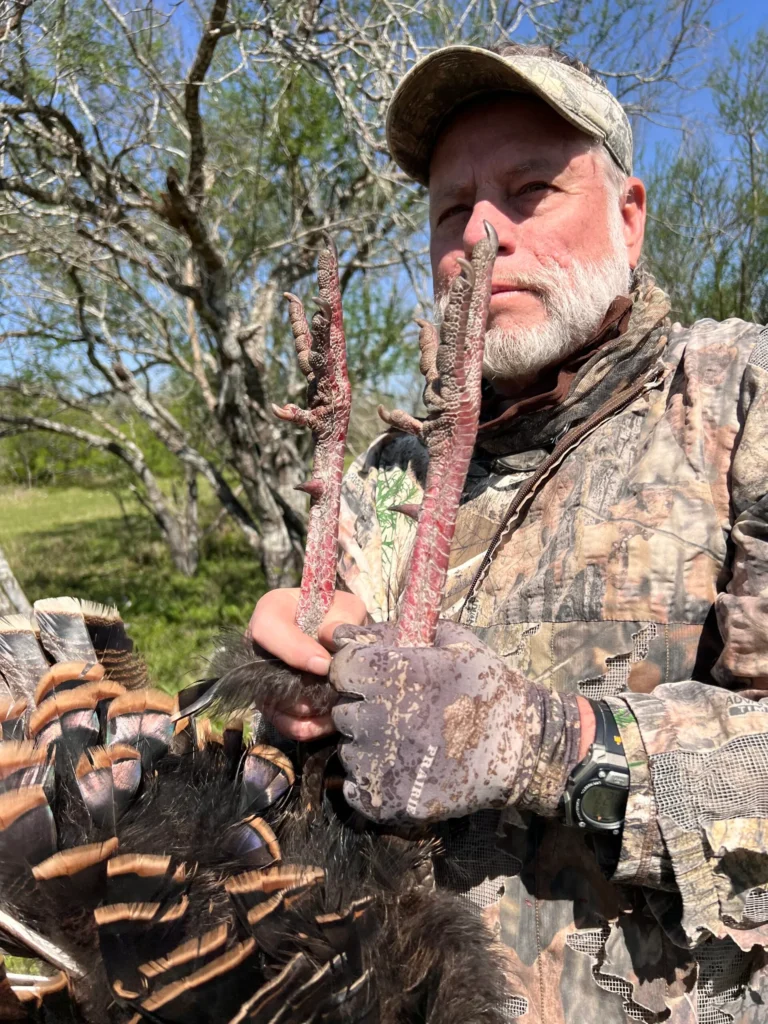
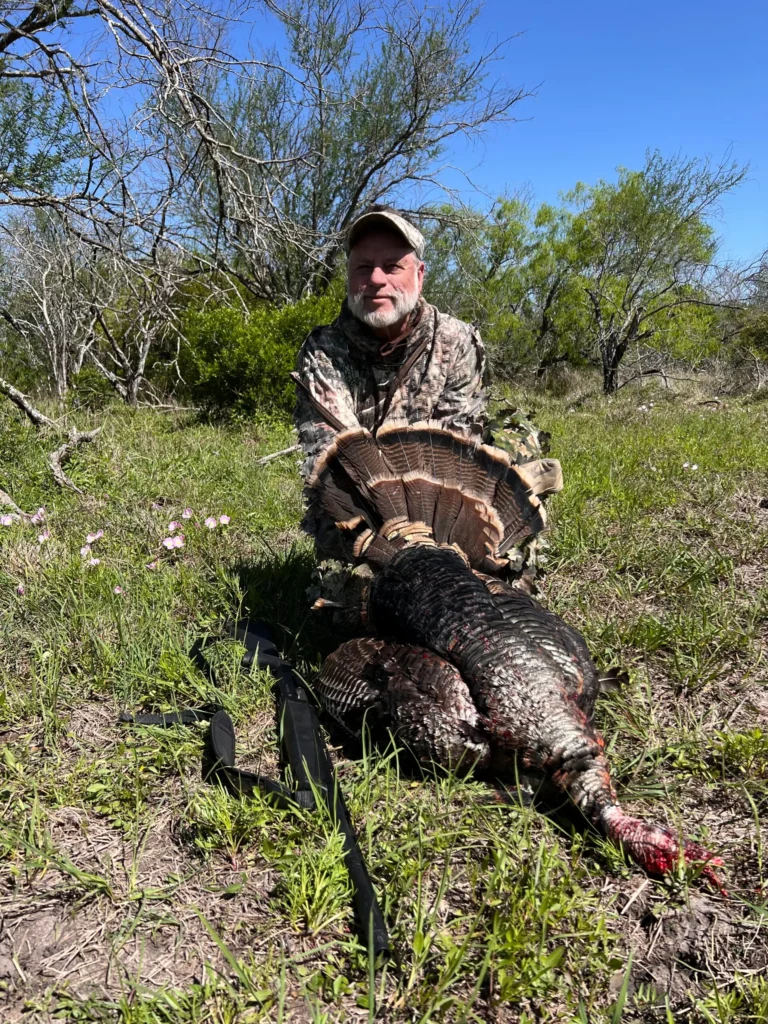
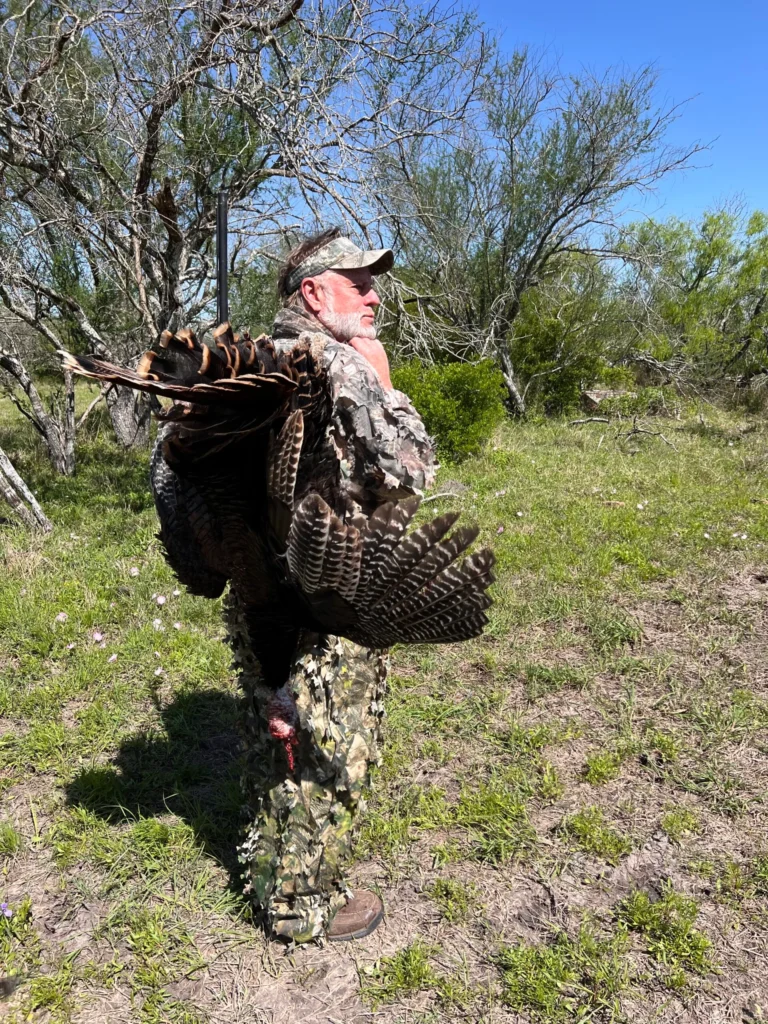
About 15 minutes later, he appeared like a ghost 60 yards away at the opposite edge of the Sendero, looking for company. After seeing nothing, he melted into the brush and headed for a small creek bottom. We waited and then called again. His immediate answer told me he was interested and alone, both good signs. I whispered to Lee to just purr softly. When he did, the bird answered again, and minutes later, he was standing thirty yards away in full strut but behind a big mesquite limb, which I could not shoot through. When he came out of his performance, I knew he would either turn right towards a brush line leading back into the creek bottom or turn left and walk in front of us. Years of hunting came into play as I moved my gun to the right where I thought the Gobbler would go. I found one small opening about 2 feet across to shoot through. It was a good guess the bird came out of strut, and still not finding any cooperative company the bird headed for the safety of the creek bottom. When he crossed into the opening, the ounce and 7/8 of copper 5’s ended his days in a shower of feathers. He turned out to be an old bird and, at over twenty pounds, a big bird.

Unexpected Western Diamondback Encounter

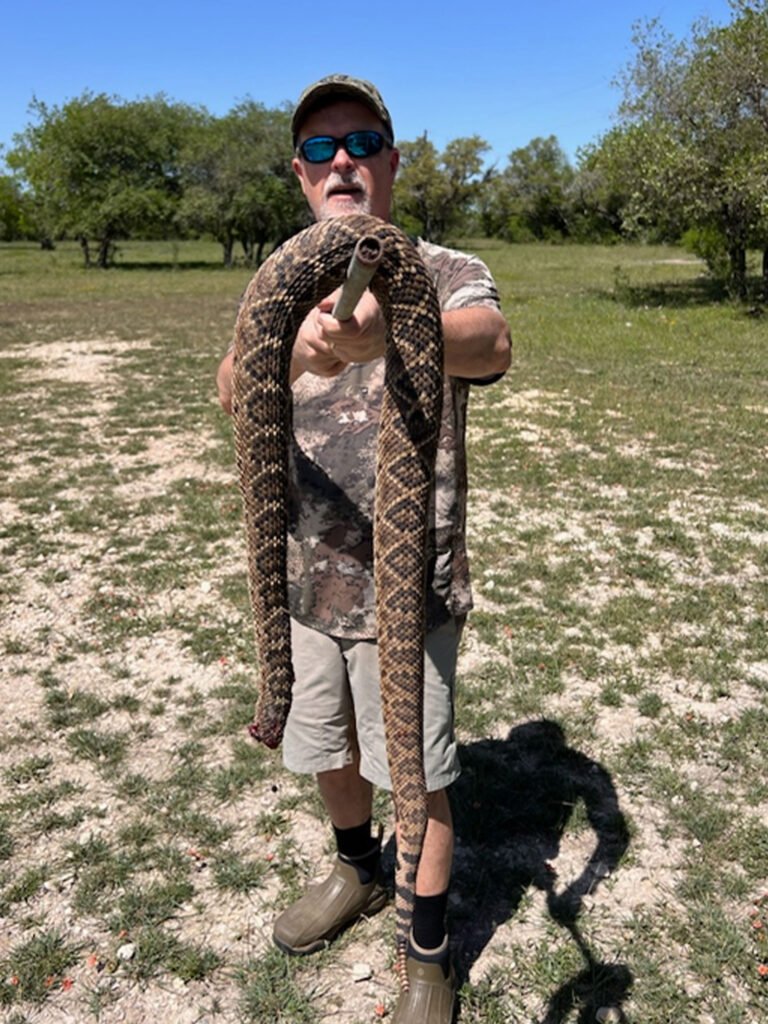
We gathered our gear after celebratory handshakes and backslaps, and Lee walked back to get the ATV. You might think the hunt ends here, but it did not. As Lee drove back to pick me up, he passed by the exact spot where we walked into the brush in the dark, and there lay a very large and active western diamondback, which he quickly dispatched since we had just walked there and the thought of being envenomated by a strong neurotoxin had made the hair on the back of our necks stand up.

Cooking The Snake And Final Words

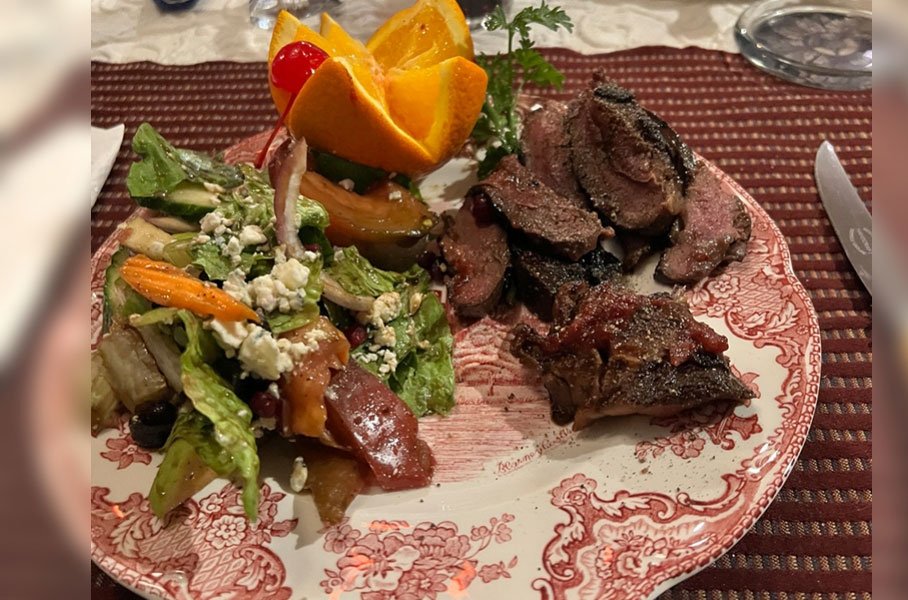
We decided to skin the snake and fry the meat. Yes, you can eat them, and since this website is also about dining on wild game, I will. There are many ways to cook them, but mine will be fried and served with cream gravy. Along with night vision, snake boots are an absolute must in south Texas and anywhere in the south, for that matter.

Texas Outfitters and Suggestions for Hunting Turkey

With a large population of Rio Grande Turkeys, Texas is a great destination, with many outfitters offering everything from classy accommodations, fully guided hunts, and fine dining to simple camps and drop-off hunts. Two of note Riojas outfitters in Beeville Hector Riojas can be found by calling 361-319-9197 or Texas Elite Outfitters at 979-587-1024 / 281-924-9720. If you’re up for an adventure, grab your gear and go. Just remember that having a Monocular for hunting with night vision Texas and snake boots will afford you some peace of mind.

HI, I’m JOHN HARDY

Hi, I’m John Hardy, a lifelong outdoorsman, fisherman, hunter, and cook. This site shares my extensive experience in the field, on the water, and in the kitchen, along with insights from our expert Pro Staff. Explore our proven tips and tools for outdoor adventures and culinary success.

Blog Details

Waterfowl: Destination Stuttgart Arkansas

I have hunted ducks and geese for over 50 years now, part of that time as a professional guide in my home state of Louisiana and surrounding areas. While I am not nearly as mad at them as I was at 35, the Syren’s song of White Fronted Geese (Specklebellys) migrating in early fall still makes my 66-year-old heart beat faster. Having enjoyed them on the table, I still look forward to hunting them whenever possible to stock the freezer with them. After talking with pro staff members Lee Lawson And Troy Borill about where the densest concentration of Specklebellys might be in the X, as they say, we decided to Hunt with Fowlco Guide Service, run by Zach Fox and Guides, some of whom are from my home state of Louisiana. Zach runs one of the premiere services in the area, and his Knowledge of the birds and relentless effort to keep his clients under them was nothing short of amazing. He provides both Duck and Goose hunting, but it was the Specklebellys we were after, and we were not to be disappointed. The accompanying photos and videos attest to that. He and his guides work tirelessly every day from long before the sun comes up until long after it has set scouting, setting up blinds and decoy spreads, and getting hunters into position. I know how much work it takes because I lived the same life in my younger days. To Contact Zach Fox, call 870-674-4817 and book quickly. He fills up fast. His Spring Snow Goose Hunts are consistent with what you see here, except there are no limits, and it is expected to kill 75-100 snow geese a morning. Of all the birds on the table, Specklebellys reign supreme, and having the opportunity to shoot 46 Specklebellys in 45 minutes is something you will not forget. Whether the Grill the Pan or the Oven The Hunting is only part of the Adventure.

HI, I’m JOHN HARDY

Hi, I’m John Hardy, a lifelong outdoorsman, fisherman, hunter, and cook. This site shares my extensive experience in the field, on the water, and in the kitchen, along with insights from our expert Pro Staff. Explore our proven tips and tools for outdoor adventures and culinary success.

Blog Details

Prespawn Snapper Fishing: The Anticipation Of Summer To Come

Red Snapper Season Overview

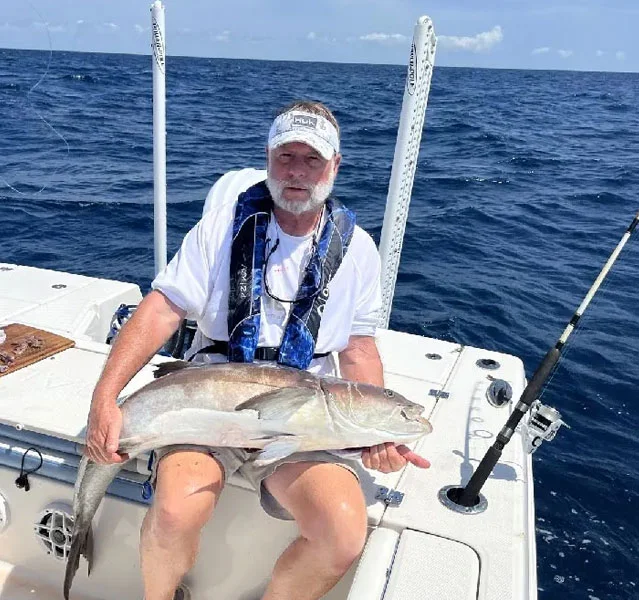
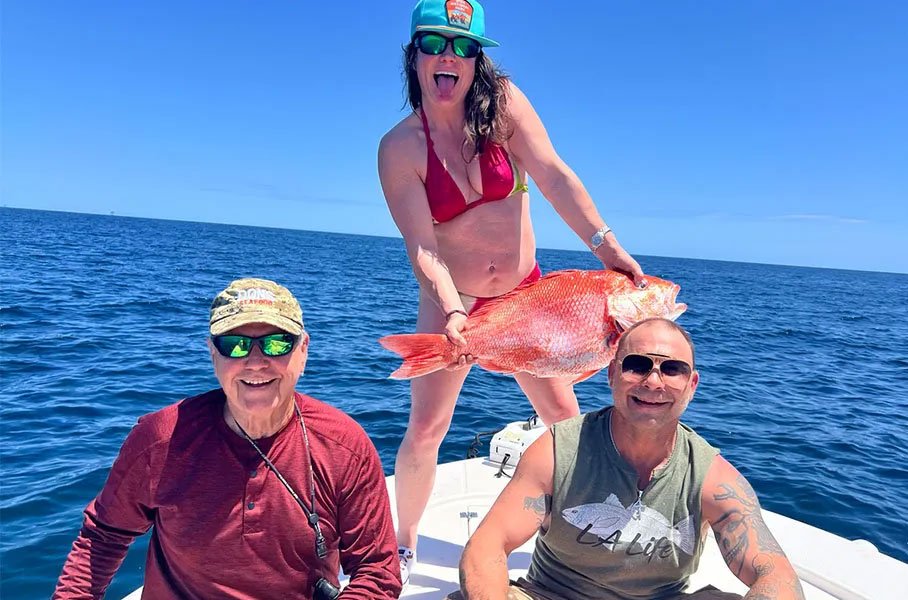
Snapper in the Central Gulf of Mexico off the Louisiana Gulf Coast begin spawning in May and continue through the first part of September. For those interested in Louisiana snapper fishing, this is a prime period to catch them. With Snapper season opening in mid-April, the first few weeks can yield some of the best fishing of the entire season. The fish feed voraciously in preparation for the spawn and collect in significant numbers in water from 65-120 feet on wrecks and platforms. With my extensive experience of over 50 years in these waters, I can confidently say that Red Snapper is the King on the plate. They are a favorite among seafood lovers because of their solid texture and rich flavor, and the difficulty of catching them only heightens their appeal.

Fishing Conditions And Strategy

It’s not always easy this time of year to catch seas calm enough to allow offshore fishing for snapper, so we observe for the passage of fronts and sometimes the only calm day afterward. The crew is then called and shows up from various destinations, knowing the prize awaits. The fish will often congregate based on their size or year class, and frequently, the first stop in shallower depths will yield a lot of 16-18″ legal fish, but not what we are after. It takes strategy to move from 70 feet to 90 feet, which is where the larger fish are located. Gaining an understanding of these fish’s migration patterns and seasonal movements can have a big impact on your haul.

Techniques For Catching Red Snapper

The size can be much larger, and fish in the 12 to 25 lb range are what we are after. Circling a platform and watching electronics will invariably show the most prominent schools on an up-current corner and close to the shady side of the structure. The fish will be shallow, anywhere from 15 to 40 feet down, and you can often watch a big snapper take your bait, which is an intimidating site, knowing what will happen next. A hard run towards the platform’s depths and safety with aching arms trying to keep them from getting there. The trick is to put enough pressure on the fish to turn his head without breaking the line, which might be easier said than done. Still, using the proper equipment and strategies, such as strong, anti-abrasion lines and heavy duty reels, can improve your chances of landing these hard-to-get fish.

Crew and Preparation

It doesn’t take long for limits to get filled and make the run back with all onboard tired and ready to get fish cleaned and enjoy fresh snapper. The crew’s camaraderie as they cooperate to clean the catch and get ready for a well-earned lunch is a testament to the success of the excursion. Maintaining the quality of the fish requires careful handling and preparation. The snapper will stay fresh and ready to cook if it is cleaned and filed quickly. The actual process of catching the fish adds a magical touch of flavor to the final dish, whether it’s a classic grilled snapper or something fancier. All in all, the true pointers of a successful red snapper season fishing trip are enjoying a delicious lunch with the crew while looking back on the day’s adventures.

Final Thoughts

A combination of ability, patience, and a love of the sea makes snapper fishing Gulf of Mexico an incredibly fulfilling experience. Every trip is made more memorable by the challenge of taking on a strong fish, the excitement of a good catch, and the delight of eating a meal prepared from that catch. Every fishing excursion is a fresh opportunity to perfect skills and adjust to shifting conditions as the season goes on. The hunt for red snapper continues to be a beloved pastime that honors the wealth and beauty of the Gulf of Mexico, enjoyed by both amateur and expert fishermen. The benefits of red snapper fishing are well worth the work and commitment, regardless of experience level. It builds camaraderie among participants, resulting in enduring friendships and treasured memories of time spent together on the water, in addition to the excitement of the catch.

HI, I’m JOHN HARDY

Hi, I’m John Hardy, a lifelong outdoorsman, fisherman, hunter, and cook. This site shares my extensive experience in the field, on the water, and in the kitchen, along with insights from our expert Pro Staff. Explore our proven tips and tools for outdoor adventures and culinary success.

Blog Details

Be Very Aware of Vibrio

Far more common than Shark Attacks and every bit as dangerous

While there are other topics vying for my attention, I am writing this article now because it could be a matter of life or limb and because it is summertime. As seafarers and fishermen, we are all too familiar with the risks of our profession, from the perils of the ocean to the hazards of the marshes. We have tools to protect us from the elements, handle large fish safely, shield ourselves from the sun, and more. However, there are invisible threats that can be just as deadly. Vibrio vulnificus is one such threat. I have had a personal encounter with it, as has our Pro-Staff member Donny Landry. These personal experiences make the information in this article all the more relevant and crucial for your safety. More on that later.

What is Vibrio:

Vibrio vulnificas is a group of Vibrio bacteria found in warm coastal waters, mainly brackish waters. The group is “halophilic,” meaning it requires salt. It is also called flesh-eating bacteria. Vibrio infection can occur after eating raw or undercooked seafood. About 10% of cases, the other 90% arise from open wound contact with salt or brackish water. By being aware of it, using good sense, and, most importantly, using preventative measures, you can significantly reduce your risk of infection. This emphasis on preventative measures underscores their importance in reducing the risk of Vibrio infection. Remember, these infections are preventable for the most part, and you have the power to protect yourself.

Seasonal infection Rates:

Notably, most infections occur during the peak summer months, Late May through October. When the water starts to cool, infection rates fall significantly. This seasonal pattern is crucial for understanding when you are most at risk.

Prevention:

One protection method that fishing guides along the coast use is Super Glue. Before leaving the dock, you can cover minor cuts or abrasions with a few drops of Super Glue. When handling fish, be careful not to get finned, which, after handling enough fish, can be hard to do; even the smallest of punctures can cause infection. Because of our own experience, we now always carry a spray bottle of bleach and water solution: 1 part bleach to 10 parts water. If we are cast netting for bait or have handled enough fish to get finned or cut from gill plates, we stop, spray with a bleach solution, rinse with fresh water, and then repeat. If going for a day on the beach, I would make this a part of every beach bag. Walking on the beach and stepping on a sharp object, rocks, seashells, or anything can be an entry point for infection. Wearing water shoes is a great preventative measure as well. Another great product that can be effective prevention is “Bag Balm,” available at Amazon a product used to treat cow udders and also used by many to moisturize dry skin. It uses an antiseptic called 8-Hydroxyquinoline sulfate, which contains compounds that can be effective at preventing infection by applying after a day on the water to any cuts or abrasions. One of the effective antibiotics used to treat Vibrio infections is Quinolone, derived from Quinoline.

Treatment:

If you even remotely suspect through symptoms that you might be dealing with a Vibrio infection, seek medical help immediately. Early treatment will increase your chances of survival and complete recovery. I can not overstate enough the importance of early diagnosis and treatment. The mortality rate of infection is about 33-35%. Even if you survive, your treatment can include amputation to save your life. Symptoms usually occur within 1-3 days and can consist of reddening and inflamed tissue, blistering and ulceration of the skin, and pain in the area where the infection occurred. If ingested from eating undercooked or raw seafood, symptoms can include Diarrhea, stomach cramps, nausea, vomiting, fever, and chills. Although antibiotic therapy is effective, bariatric treatment can not be understated. If you are infected, immediately find and be aware of the closest hospital with a bariatric chamber and be prepared to go.

Our experiences with it:

My experience with a suspected infection came after the first three days of working on a commercial snapper boat after handling hundreds of red snapper and getting finned and cut by gill plates. I noticed on the second day that my hands had been punctured and cut quite a bit, and that night, they began to get inflamed and swell. On the third morning, they were very painful and getting worse by the end of that day, I could not close my fingers, and the pain had become so intense that I could not sleep. When I mentioned it to one of the crew, who was also the cook and a lifelong commercial fisherman, he asked to look at my hands. After inspecting them, he looked concerned and said I have something to help. If not, you’re going to need to see a doctor. He took a green tin of Bag Balm available at Amazon from the first aid kit on board and instructed me to cover my hands with it. Then, he gave me a pair of loose cloth gloves and told me to soak them with the Bag Balm and sleep with them on. It was not a process that I was looking forward to at all, but if it was going to stop the pain, I was all in.
The following day, after trying to sleep with my arms outstretched to keep from rubbing Bag Balm all over the bed, I awoke to my hands not feeling as if they were burning and I could move my fingers a lot better.
I continued the process for another three nights, and the treatment had dramatically reduced the redness, inflammation, and swelling. I continued to rub Bag Balm on my hands for another three days, and eventually, they became hardened by the sun, salt, and sea, and the cuts were minor and less frequent. I also handled the fish differently, using a loop of a hundred-pound monofilament line as a de-hooker. It was astonishing then that a product used to treat cow udders, which I had been unaware of, had been responsible for the cure. I was even more astonished when researching this article. I found that the active ingredient in Bag Balm was Quinoline and that one of the primary antibiotics used to treat Vibrio is Quinolone derived from Quinoline. Was I professionally diagnosed with Vibrio? No, but the circumstances and symptoms were more than suspect.
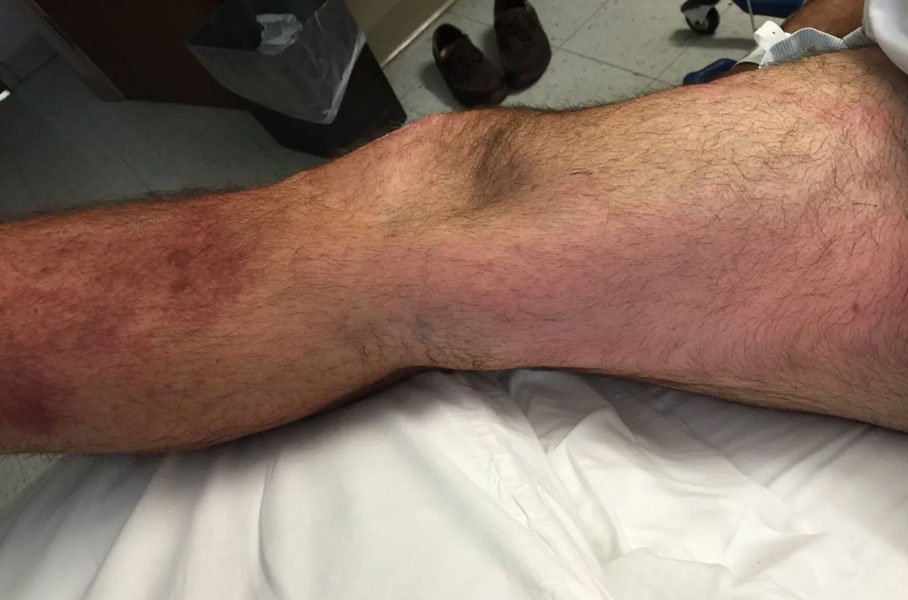
Pro Staff member Donny Landry’s experience with it was diagnosed and was life-threatening. As he had done hundreds of times, he was cast netting for bait at Marsh Island and had a tiny cut on his shin. After dragging the cast net out of the salty marsh water and across his shin, he was infected with Vibrio vulnificus and underwent a painful and scary recovery process. Symptoms appeared after about three days: the same reddening, inflammation, and pain in his leg and darkening of the skin with lesions beginning to form. After a trip to the doctor, they prescribed intensive antibiotic treatment, and a few days later, with no improvement, the pain intensified, and his leg turned almost black. He was sitting in the doctor’s office with his iPad, reading everything he could to discuss with the doctors. He came across an article discussing the effectiveness of bariatric treatment for Vibrio. He immediately started asking the doctor to be treated using this, and they resisted either out of ignorance on their part or just adhering to their training and, of course, Big Pharma, which I will say no more about here. They finally conceded to the treatment, and after the second day of treatment, the pain was subsiding, and his leg was starting to change color. It was an ordeal that none of us would forget. After a month of treatment and a recovery time of eight weeks, give or take, he was and is just fine. Had the Doctors prescribed bariatric treatment initially, along with antibiotic treatment, the near-death experience would not have been so traumatic. The accompanying photos give only a partial view of what he went through. Another friend of his, while taking the boat out of the water, scraped his arm on the trailer, was infected, and had to have his arm amputated above the elbow.
This article is not written to scare anyone to the point that they are afraid to enjoy the outdoors. It is written to inform people and offer information that may prevent infection and aid in treatment if infected.
Consider these statistics: In 2023, there were 69 Total Shark Attacks reported Worldwide, 36 of which were in the US, and two of which were fatal. This is a meager mortality rate.
The CDC reports approximately 150 to 200 hundred cases of Vibrio vulnificus every year, and about 1 in 5 die from it, so compared to Shark attacks, it is a more potentially deadly threat.
With knowledge, awareness, and prevention, you can enjoy every minute in the great outdoors. I know I will never stop, and I hope you don’t either.
HI, I’m JOHN HARDY

Hi, I’m John Hardy, a lifelong outdoorsman, fisherman, hunter, and cook. This site shares my extensive experience in the field, on the water, and in the kitchen, along with insights from our expert Pro Staff. Explore our proven tips and tools for outdoor adventures and culinary success.

Cart (0 items)
Select the fields to be shown. Others will be hidden. Drag and drop to rearrange the order.
  • Image
  • SKU
  • Rating
  • Price
  • Stock
  • Availability
  • Add to cart
  • Description
  • Content
  • Weight
  • Dimensions
  • Additional information
Click outside to hide the comparison bar
Compare
Select the fields to be shown. Others will be hidden. Drag and drop to rearrange the order.
  • Image
  • SKU
  • Rating
  • Price
  • Stock
  • Availability
  • Add to cart
  • Description
  • Content
  • Weight
  • Dimensions
  • Additional information
Click outside to hide the comparison bar
Compare